

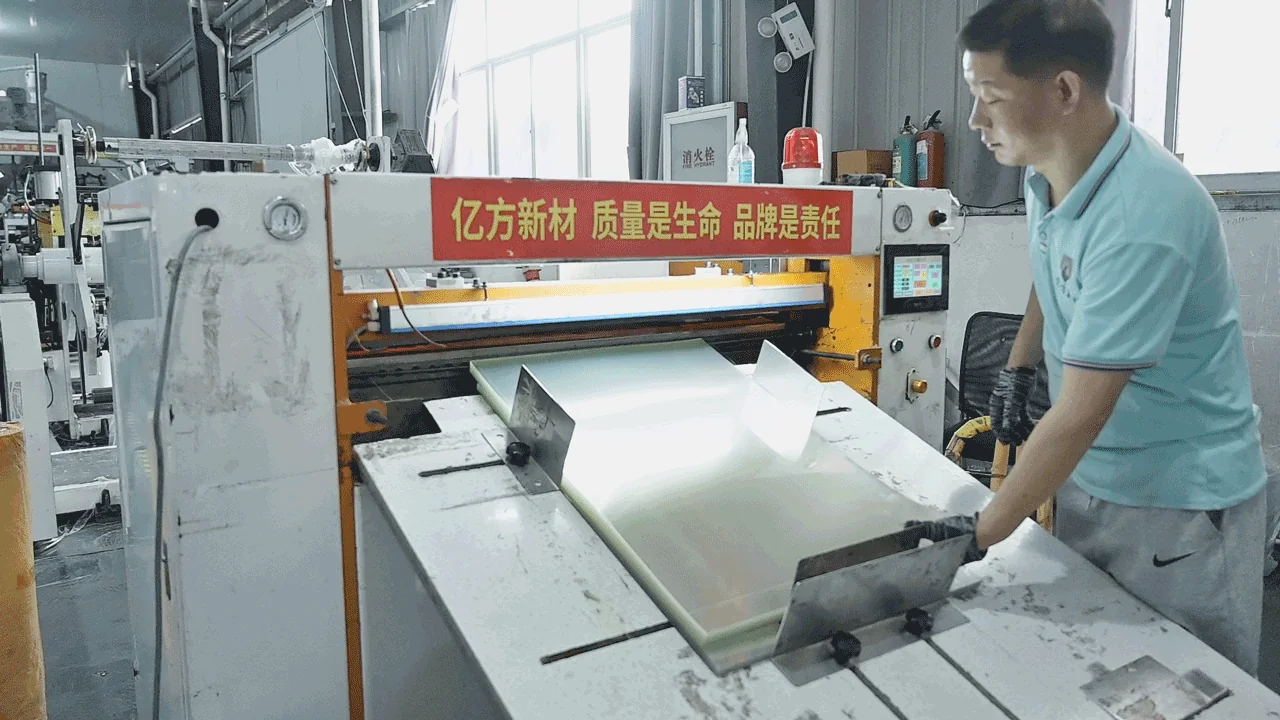
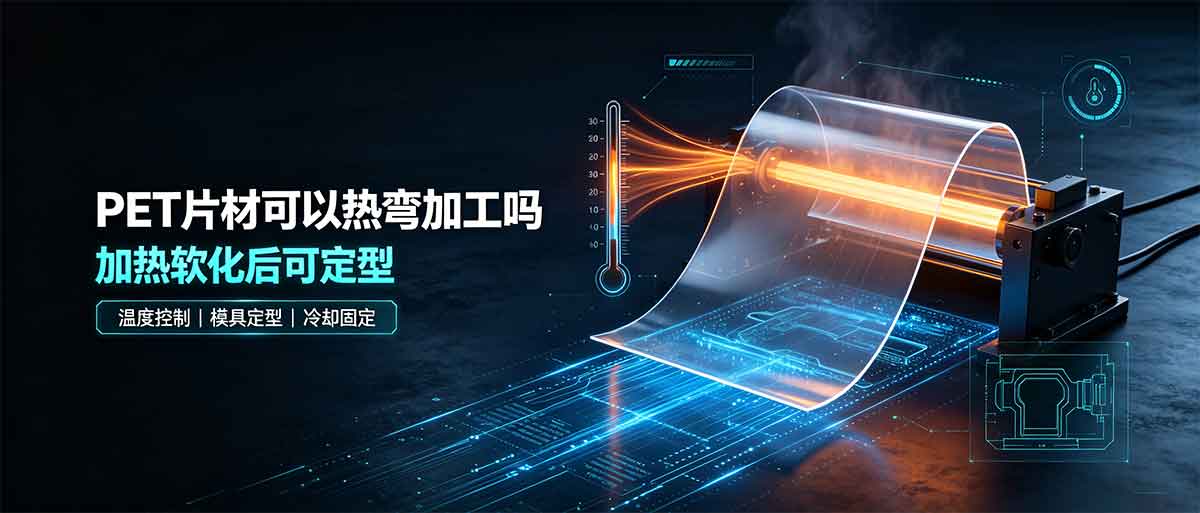
Yes, but the temperature must be strictly controlled (approximately 120~150℃) and the heating time must be precisely controlled, otherwise it may easily lead to whitening, deformation or internal stress cracking.
PET sheets (polyethylene terephthalate) are thermoplastic materials. They soften above their glass transition temperature (approximately 75°C) and remain malleable until heated to their melting point (approximately 250°C).Hot bending is entirely feasibleIn actual production, hot bending forming typically uses infrared heating or a hot air oven to evenly heat the sheet material to...130~145℃(Adjust according to thickness and crystallinity), at this time the sheet is in a rubbery state and can be bent into the required angle or arc.
However, three key limitations should be noted:
-
Narrow temperature window:It is easy to spring back when bent below 120°C, but the surface will bubble or degrade above 150°C.
-
Time sensitive:The heating time for a 3mm thick sheet is about 60-90 seconds. If it is too short, the large temperature difference between the inside and outside will cause cracking, and if it is too long, it will crystallize and turn white.
-
Mold Design:The bending radius is recommended to be no less than 3 times the sheet thickness, and rapid cooling (air cooling or water cooling) is required to fix the shape.
Practical suggestions:Before hot bending, conduct small-scale testing, using a thermometer to monitor the surface temperature and employing fixtures to control the angle deviation within ±1°. For mass production, a servo hot bending machine is recommended, as it can achieve automatic temperature control and timing, achieving a yield rate of over 95%. For transparent, high-gloss finished products, it is suggested to use co-extruded matte or scratch-resistant PET sheets, which will result in less loss of optical properties after hot bending.