

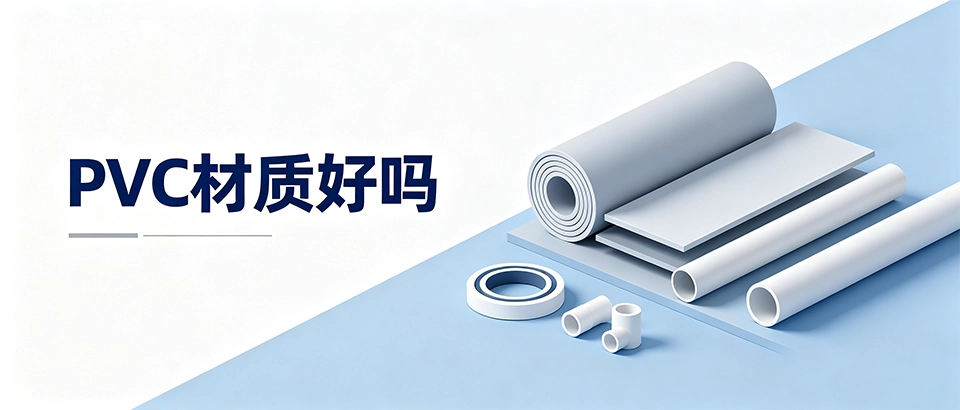
PVC is one of the most widely used general-purpose plastics in industrial and civilian fields, and its common forms include sheets, pipes, rolls, profiles, and injection molded parts. Its core advantages lie in its controllable cost, stable processing, good acid and alkali resistance, and good weather resistance, making it suitable for most common protection, support, transportation, and decoration applications.
Main advantages of PVC material
PVC materials have good chemical corrosion resistance and strong tolerance to common acids, alkalis, salt spray, and environmental humidity. This makes them commonly used in chemical protection, wastewater treatment, outdoor facilities, and building components.
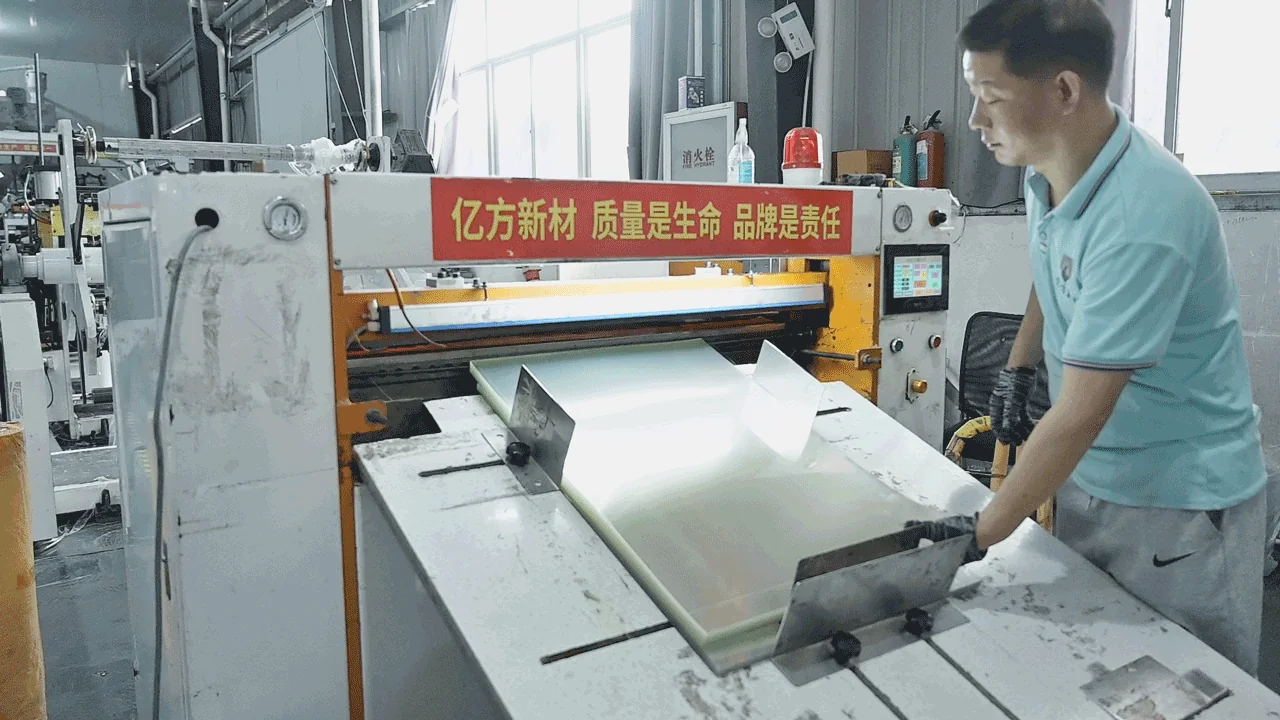
PVC material has mature processing methods, and can be manufactured into products of different specifications through extrusion, calendering, injection molding, welding, etc. When enterprises purchase in bulk, the source of materials is stable, and the customization cycle is relatively controllable.
Compared to some high-performance engineering plastics, PVC is less expensive, making it suitable for budget-sensitive projects that require weather resistance and dimensional stability. It is also a common base material for many standard and general-purpose parts.
Common shortcomings of PVC material
PVC typically has a low long-term operating temperature, and ordinary PVC products are prone to softening, deformation, or performance degradation in high-temperature environments. Therefore, it is not suitable for working conditions involving prolonged exposure to high-temperature heat sources.
Plasticizers may be added to flexible PVC products, and there is a risk of migration, exudation, and performance changes when used for a long time or exposed to certain media. When purchasing, you should pay special attention to the applicable temperature, the media to be exposed to, and the environmental protection rating.
PVC materials may produce irritating fumes when burned. In scenarios with high fire safety requirements, additional assessments of flame retardant ratings and installation conditions are necessary. Its safety performance cannot be judged solely based on the fact that it is a "plastic material."
Comparison of PVC material with common materials
| Material | Cost level | Weather resistance | Chemical resistance | Heat resistance | Typical uses |
|---|---|---|---|---|---|
| PVC | medium to low | better | better | generally | Sheets, pipes, coils, and profiles |
| PP | medium to low | medium | better | better | Storage tanks, filter components, general structural components |
| ON | medium to low | better | better | generally | Pipes, gaskets, and packaging |
| PC | Medium and high | better | generally | better | Transparent components, protective components, structural components |
| ABS | medium | medium | generally | better | Casing, accessories, structural components |
Key points for selecting PVC products
- The operating environment must be clearly defined, including temperature, humidity, acid and alkaline media, ultraviolet exposure, and installation method. Different operating conditions require significantly different grades of PVC materials.
- Distinguish between rigid PVC and flexible PVC. Rigid PVC products are more suitable for structural support, sheets, and pipes, while flexible PVC products are more suitable for sealing, gasketing, and flexible wrapping.
- Pay attention to the environmental protection rating, flame retardancy rating, and hygiene requirements of materials, especially for projects involving indoor environments, food contact, wastewater treatment, and enclosed spaces.
- Check the thickness, tolerance, color, surface treatment, and connection method to avoid purchasing materials based solely on their names while ignoring specific specifications.
- Suppliers should be required to provide material specifications, test reports, and usage recommendations. Small-scale sample verification should be conducted before bulk purchases are made, if necessary.
Applications of PVC material
- Chemical corrosion protection: can be used for protective linings, storage tanks, ventilation ducts and processing equipment in general acid and alkaline environments.
- Building accessories: commonly found in decorative panels, drainage pipes, cable trays, door frames, window frames, and waterproof auxiliary structures.
- Environmental water treatment: suitable for sewage treatment, aeration systems, dosing devices, and corrosion-resistant conveying components.
- General industrial applications: Can be used to manufacture tooling sheets, anti-static worktops, equipment covers, isolation components, and label base plates.
- Packaging and Protection: Suitable for making pads, covers, cushioning components, seals, and temporary protective structures.
Recommendations for Enterprise Application Scenarios
For projects in the chemical, environmental protection, water treatment, and building infrastructure sectors, PVC can serve as a standard solution for corrosion protection, weather resistance, and low cost. It helps companies reduce material procurement costs while meeting the requirements of most non-high-temperature and non-high-corrosion operating conditions.
For applications involving prolonged high temperatures, high flame retardancy requirements, food contact, or strong oxidizing media, PVC requires careful evaluation. Companies should consider specific operating parameters to select a more suitable material grade or alternative.
When purchasing PVC products, you should not only focus on the price, but also confirm the thickness, weather resistance rating, environmental standards, flame retardant properties, and post-processing methods. This can reduce problems such as deformation, premature aging, or insufficient compatibility after installation.
Summarize
PVC is a mature, economical material with good weather resistance in most conventional industrial and civilian applications. Its main advantages are low cost, mature processing, and good resistance to acids and alkalis and weathering.
PVC is not suitable for all working conditions, especially for long-term high-temperature applications, high flame-retardant requirements, and special contact media. Selection should be based on a comprehensive assessment of the operating environment, material grade, specifications, and supplier information.
Overall, the quality of PVC material depends on the specific application and selection criteria. It can be given priority in general corrosion protection, transportation, decoration, and protective applications; however, material verification should be conducted for critical operating conditions.
Frequently Asked Questions
- What is PVC material?
- PVC, or polyvinyl chloride, is a common and general-purpose plastic that can be made into rigid sheets, pipes, rolls, profiles, and flexible seals, and has a wide range of applications.
- Is PVC material toxic?
- Under normal use conditions, compliant PVC products are generally safe and controllable. However, plasticizers, high-temperature combustion fumes, and specific contact media in flexible PVC require close monitoring.
- Which is better, PVC or PP?
- PVC material exhibits better weather resistance and acid/alkali resistance, and is generally less expensive; PP material offers better heat resistance and bending resistance. The choice between the two should be based on temperature, medium, and structural requirements.
- Is PVC material sun-resistant?
- While regular PVC has some weather resistance, prolonged exposure to sunlight can still cause fading, brittleness, or performance degradation. For outdoor use, weather-resistant PVC products are recommended.
- How high a temperature can PVC material withstand?
- The long-term operating temperature of ordinary PVC is generally around 60℃, while specially formulated products can improve heat resistance. Specific details should be based on the material specifications and test reports.