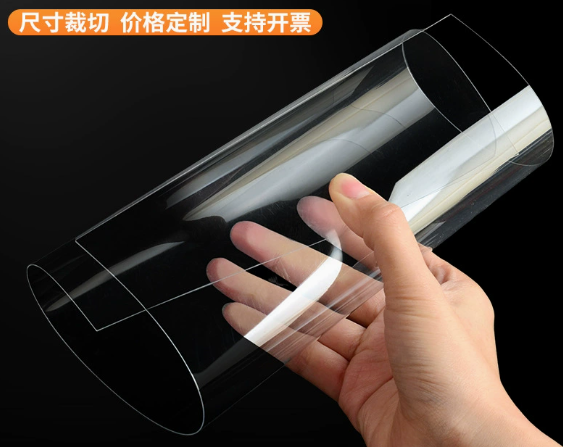
Acrylic sheet specifications: from standard sizes to factory
$1.15 available: In StockQuick Overview: Zhejiang Yifang New Materials, with 20 years of production and processing, international standards, and a daily output of 70 tons.
Acrylic sheet specifications: from standard sizes to factory direct supply, essential knowledge for engineering procurement
What are the current specifications for acrylic sheets?
For engineering procurement, the specifications of acrylic sheets need to be precise to every parameter. The following is the complete specification system:
1. Size specifications (length x width)
Small size: 610 × 1220mm, 915 × 1830mm
Standard sizes: 1000 × 1500mm, 1220 × 1830mm, 1220 × 2440mm (most mainstream)
Large sizes: 1500 × 2500mm, 1500 × 3000mm, 1600 × 3200mm, 2000 × 3000mm
Oversized size: 2030 × 3050mm, 2050 × 3050mm (imported grade)
2. Thickness specification (unit: mm)
Extrusion board: 0.8, 1.0, 1.2, 1.5, 2.0, 2.5, 3.0, 4.0, 5.0, 6.0
Cast plates: 1.5, 2.0, 3.0, 4.0, 5.0, 6.0, 8.0, 10.0, 12.0, 15.0, 20.0, 25.0, 30.0, 40.0, 50.0
Tolerance: extruded plate thickness tolerance ± 0.1-0.3mm; cast plate tolerance ± 0.2-0.5mm (the thicker the thickness, the greater the tolerance)
3. Physical performance level
General grade: ordinary transparent or colored board
Weather resistant grade: UV absorbent added, outdoor lifespan of 3-5 years
Flame retardant grade: UL94 V-2 or V-0 grade, self extinguishing upon ignition
Impact resistance level: Adding rubber components increases impact resistance by 5-10 times
Optical grade: with very few impurities and a transmittance of over 93%, used for precision optical devices
4. Surface texture
Smooth surface: high gloss, mirror effect
Matte: semi transparent, with good uniform lighting effect
Matte: No reflection, delicate touch
Cloth pattern/leather pattern/brushed: decorative texture
Production Process of Zhejiang Yifang Factory
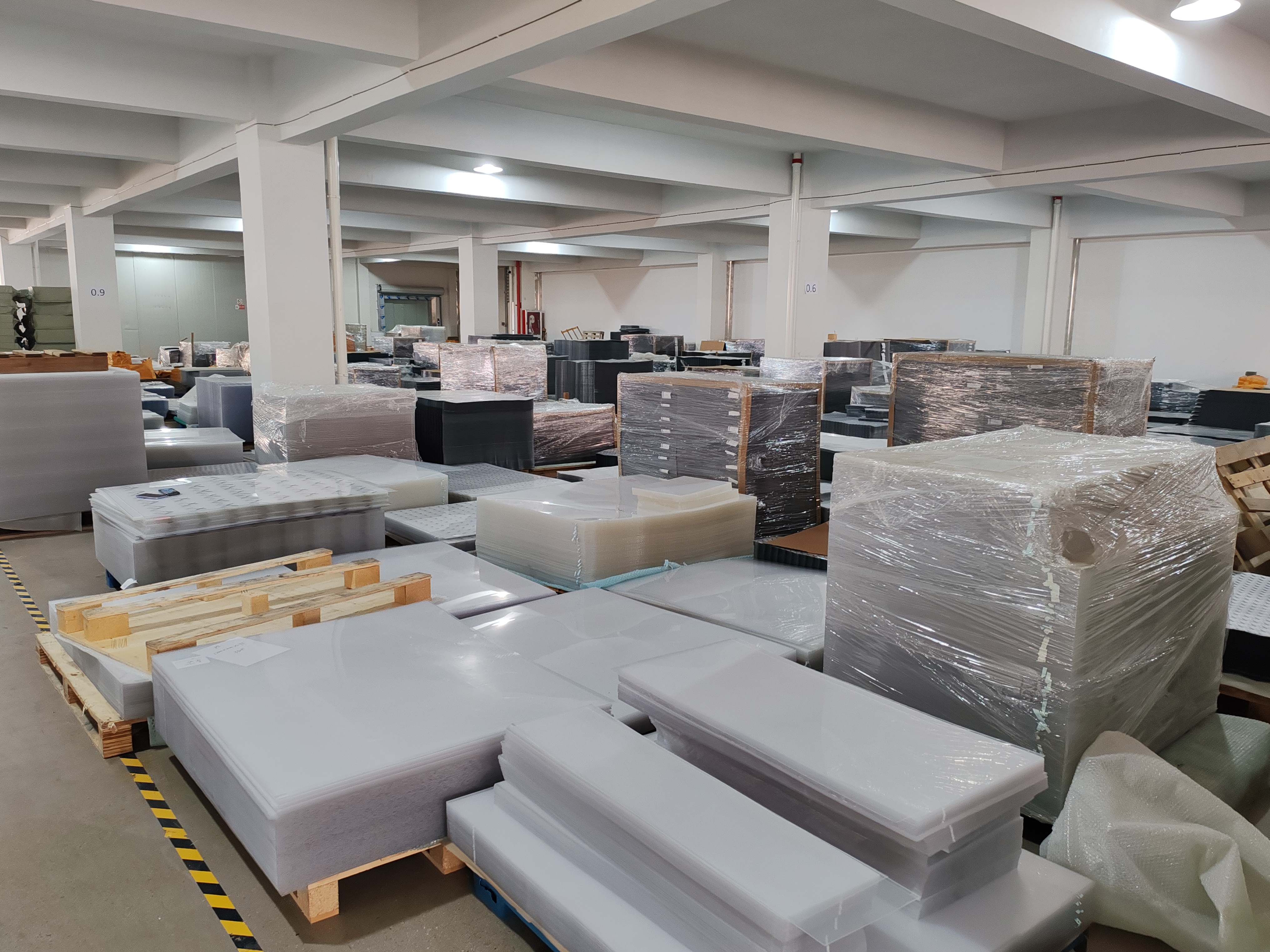
Zhejiang Yifang has two casting production lines and three extrusion production lines, with an annual production capacity of over 5000 tons. The production process strictly follows the ISO9001 quality management system:
Raw material preparation: Imported MMA monomers (Mitsubishi, LG brands) or domestically produced high-quality new materials are used, and the color paste is made of Clariant or BASF brands.
Casting process: Mix MMA monomer, initiator, and additives and inject them into a mold composed of two glass plates. Seal the mold and place it in a 40-50 ℃ water bath for 24-48 hours of polymerization. Then raise the temperature to 100-120 ℃ and cure for 2-4 hours. After natural cooling, demold the mold.
Extrusion process: PMMA particles are melted and extruded through a high-temperature screw, and then shaped, cooled, pulled, and cut into pieces by a three roll calender. Continuous production with high efficiency.
Annealing treatment: Place the board in an oven and slowly heat it up to 80-90 ℃ for several hours, then slowly cool it down to eliminate internal stress.
Cutting and Grinding: Use high-precision cutting machines to cut edges and perform flame polishing or milling treatment on the edges.
Quality inspection: Testing indicators such as transmittance, haze, yellow index, impact strength, Vicat softening point, etc.
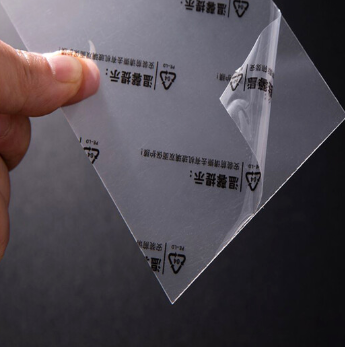
Packaging: film covering, corner protectors, packaging.
Order shipment and packaging
Engineering orders usually have large quantities and multiple specifications. Our packaging plan is as follows:
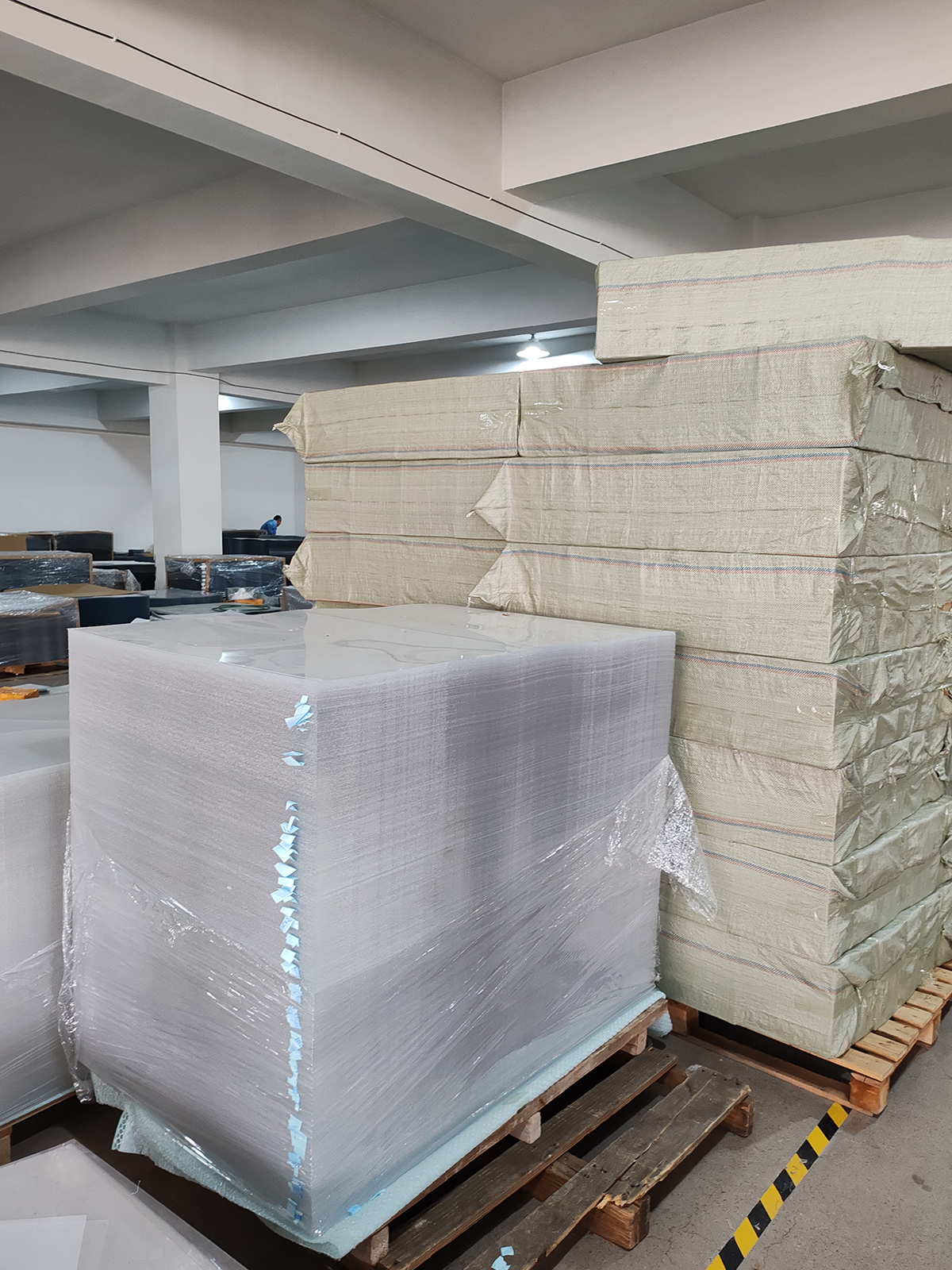
Classification and packaging: Classify by thickness, size, and color to avoid difficulty in on-site sorting due to mixed packaging.
Clear identification: Each pallet is labeled with a detailed packing list on the outside, indicating product specifications, quantity, and order number.
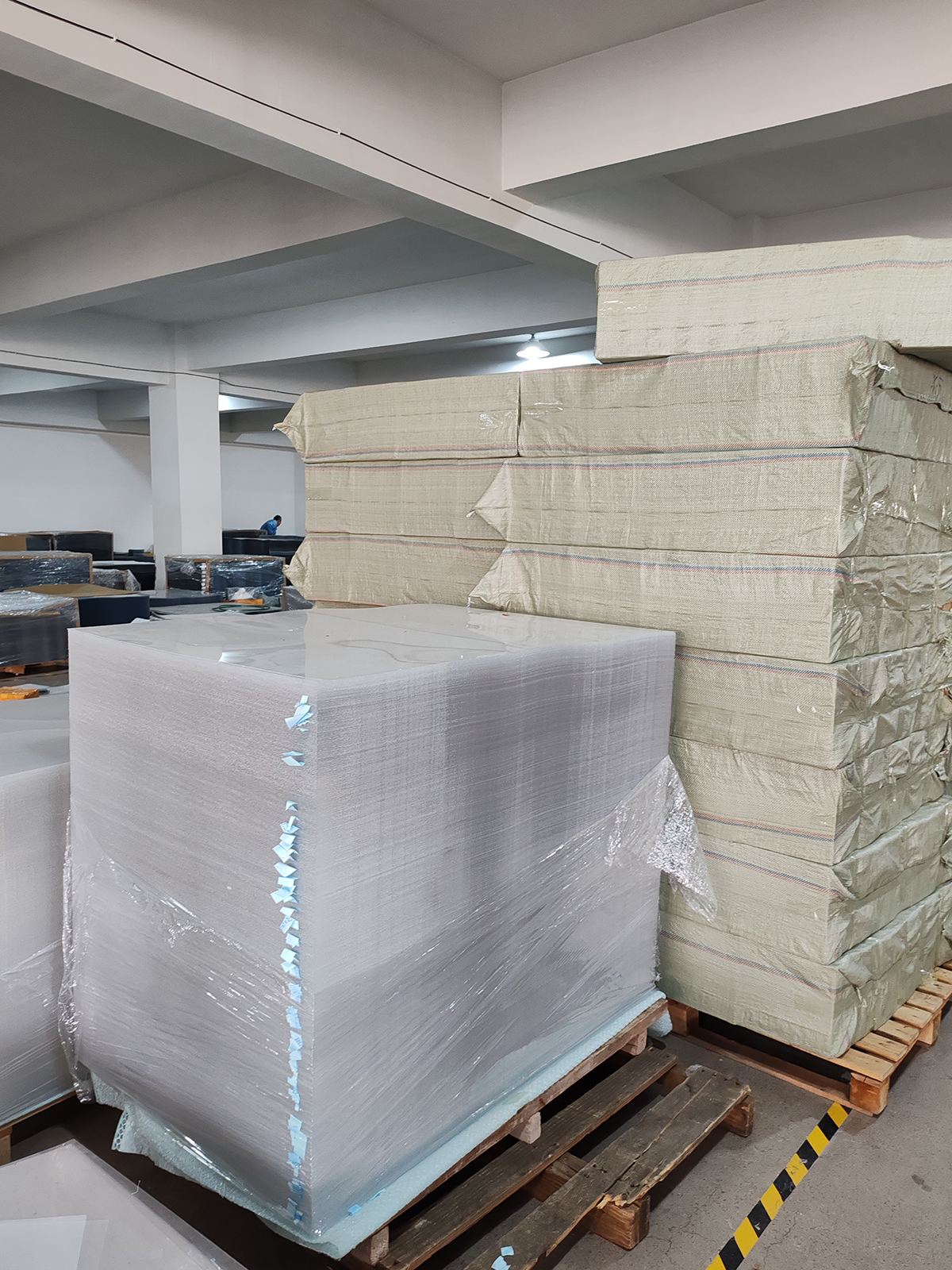
Reinforcement measures: add high-density foam plates between each layer of plates, use metal corner protectors at the four corners of the tray, and at least 4 packing belts.
Moisture proof treatment: The tray should be wrapped with at least 3 layers of stretch film and a desiccant should be placed at the bottom of the tray (for export to high humidity areas).
Special protection: For polished edges or silk screen surfaces, additional masking paper is added for protection.
International logistics services
We provide professional international logistics services for large-scale engineering projects:
Project logistics: For large-scale projects such as mall decoration and exhibition hall construction, we can provide a full logistics solution from the factory to the construction site, including domestic transportation, export customs declaration, sea transportation, destination port customs clearance, inland transportation, unloading, etc.
Multimodal transportation: Combining sea freight, railway, and highway to optimize cost and efficiency.
Insurance services: Assist in purchasing ocean all risk insurance to protect the value of goods.
Document support: Provide a complete set of documents including certificate of origin, phytosanitary certificate (if required), packing list, invoice, bill of lading, insurance policy, etc.
Support customized services, guaranteed after-sales service
Engineering customization:
Cut the irregular parts according to the drawing, and provide a splicing installation diagram.
Batch screen printing of brand logos, with color adjustable to Pantone numbers.
Hot bending forming: can produce circular arcs, right angle bends, U-shaped grooves, etc.
Adhesive assembly: using acrylic special adhesive, with high bonding strength and no bubbles.
After sales guarantee:
During the warranty period, if there are issues such as non-human natural cracking, yellowing, blistering, etc., free replacement is required.
Provide processing guidance videos and written instructions.
7 x 12 hours online technical consultation.
Frequently Asked Questions
Q: What is the difference between flame-retardant acrylic and ordinary acrylic?
Answer: Flame retardant acrylic (also known as fire-resistant acrylic) extinguishes itself upon ignition and does not produce droplets, meeting UL94 V-2 or V-0 standards. Ordinary acrylic will continue to burn and produce droplets when exposed to fire. Flame retardant acrylic is suitable for scenes with strict fire safety requirements such as public place decoration and interior decoration of transportation vehicles.
Q: What is the temperature resistance range of acrylic sheet?
Answer: Continuous use temperature: Ordinary acrylic is -20 ℃ to+70 ℃; The impact resistance level is -40 ℃ to+65 ℃; The flame retardant level is -20 ℃ to+80 ℃. The hot deformation temperature is about 95 ℃. It will soften and deform above 80 ℃, and become brittle and prone to cracking below -20 ℃.
Q: How to bond acrylic sheets? What glue should be used?
Answer: It is recommended to use acrylic adhesive (such as chloroform, UV glue, dichloromethane, etc.). Before bonding, the bonding surface needs to be cleaned thoroughly, and glue should be evenly applied with a syringe or brush, then firmly pressed and fixed for a few minutes. Large area bonding can use acrylic special UV glue combined with UV lamp curing. Caution: Do not use 502 or regular AB glue, as it will turn white and not bond firmly.
| product type | pet、ps、acrylic、acrylic mirror、pvc sheet,acrylic sheet |
| thickness | 0.35-300mm |
| Styles | 1220*2440,1220*1830,500*900,50*60,960*1950,700*900/Customization of various specifications and sizes |
| delivery time | 5-8day |
| manufacture | Yifang |
related products