Comparison of Cutting Methods for Casting Acrylic Plates with Different Thicknesses
$1.15 available: In StockQuick Overview: Zhejiang Yifang New Materials, with 20 years of production and processing, international standards, and a daily output of 70 tons.
Comparison of Cutting Methods for Casting Acrylic Plates with Different Thicknesses
The thickness of cast acrylic sheets ranges from 1mm to over 50mm, and different thicknesses of sheets have completely different requirements for equipment, parameters, and processes during cutting. Thin plates pursue "speed, precision, and smoothness", while thick plates emphasize "stability, speed, and transparency" - choosing the wrong method can result in rough edges affecting aesthetics, and in severe cases, the entire piece can be scrapped and waste materials.
This article will systematically introduce the optimal cutting methods, parameter settings, and precautions for casting acrylic sheets in different thickness ranges according to thickness grading, helping you choose the most suitable cutting scheme based on actual needs. Whether you are engaged in small-scale handmade production or large-scale industrial production, you can find practical references here.
To cut and cast acrylic sheets, the first thing to understand is the essential difference between cast sheets and extruded sheets:
Cutting characteristics of casting plates: Casting plates are slowly polymerized from liquid MMA monomers in glass molds, with high molecular weight, long and uniform molecular chains. When laser cutting casting plates, the cutting edges are milky white and the carving effect is excellent. The cutting of casting plates has no burrs, but the required power setting is usually higher than that of extrusion plates.
The cutting characteristics of extruded plates: extruded plates can produce flame polished cutting edges, and the required laser power is usually lower than that of cast plates when the thickness of the plate is the same.
General precautions:
Keep the material surface clean before processing
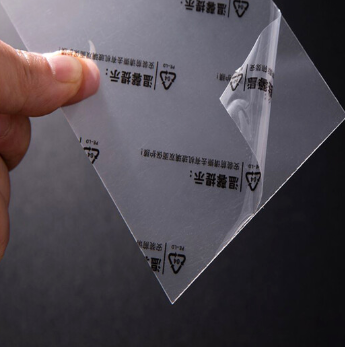
Keep the protective film until processing is complete
Equipped with a good ventilation and smoke exhaust system
Select appropriate equipment and parameters based on thickness
The following is a comparison guide for different thicknesses and cutting methods of cast acrylic sheets:
Ultra thin board (0.8-1.5mm)
Recommended method parameter reference precautions
Laser cutting power 40-60W, moderate speed, smooth edges, high precision
Hook knife manual cutting, repeated engraving 5-10 times, and then breaking suitable for small batches and simple straight lines
CNC engraving small diameter cutting tools are prone to deformation at low speeds and require caution
Thin plate (2-3mm)
Recommended method parameter reference precautions
The best choice for laser cutting power is 60-80W, with a speed of 10-20mm/s. The incision is smooth and not prone to edge breakage
CNC engraving single blade spiral milling cutter 1-2mm, speed 18000-24000RPM with air-cooled heat dissipation
The hook knife has limited accuracy in manually cutting and engraving to 1/3 depth, making it suitable for simple shapes
Medium thick plate (3-8mm)
Recommended method parameter reference precautions
Laser cutting 2.5-inch focusing mirror, 30-60W power, 100W laser tube recommended power of 40% -60%
CNC engraving spindle speed 18000-24000rpm, recommended feed rate 800-1200mm/min
Sawing hard alloy saw blade, with a saw tooth spacing of 13mm. The saw blade is only slightly higher than the board
Thick plate (8-20mm)
Recommended method parameter reference precautions
Laser cutting of 4-inch focusing mirror, 75mm focusing mirror requires high power for thick material
CNC engraving with layered cutting to avoid one deep cut requires coordination with a cooling system
Professional waterjet cutting equipment is suitable for ultra thick plates and has high costs
Ultra thick plate (over 20mm)
Recommended method parameter reference precautions
Laser cutting 100mm focusing mirror, multiple slow cutting. Domestic laser tube with power below 400 watts can process 40mm or less
Water jet cutting professional equipment has no thermal impact and high precision
4、 How to cut cast acrylic sheet and what are the techniques
Laser cutting techniques
Focus adjustment for thick plate cutting: When cutting thick acrylic, manual adjustment is required after automatic focusing. Move the worktable up by 1/3 or even half of the material thickness. The workbench moves upwards by 3-15mm (1/3 of the material thickness) and 15-30mm (half of the material thickness).
Blowing control for thick plates: Many people like to use strong winds to cool the top of acrylic, but when cutting thick acrylic, if the flame goes out on the acrylic, it may be due to insufficient power or too fast speed. Thick plate cutting should minimize blowing, and the minimum blowing on the pen cart is mainly to protect the lens from contamination.
Thick plate exhaust: A good exhaust system is the primary condition for a good working environment. Place a thin aluminum foil or sheet on the grid table to cover the entire work area, and the acrylic should be about 2-10 centimeters higher than the grid table.
CNC/Mechanical Cutting Techniques
Spindle speed: For acrylic, the recommended spindle speed is usually between 18000 and 24000 revolutions per minute. Excessive rotational speed can generate too much heat, causing the material to melt.
Tool selection: It is recommended to use single blade or specialized plastic cutting tools, which can form larger chip removal channels and effectively dissipate heat from the cutting area. Sharp cutting edges help reduce friction, thereby lowering the risk of melting.
Preventing edge breakage: Applying adhesive or padding to the back of the board can prevent edge breakage and fuzzing. Layered cutting to avoid one deep cut pulling the board.
Q1: Are there significant differences in laser cutting parameters for casting plates of different thicknesses?
The difference is significant. Thin plates (2-3mm) are recommended to have a power of 60-80W and a speed of 10-20mm/s; 3-5mm thick plate, recommended power of 40% -60% for 100W laser tube, speed of 12-15mm/s; Thick plates over 10mm require a 75mm focusing lens, with a speed generally ranging from 0.08-0.12 meters per minute. The thicker the thickness, the higher the required power and the slower the speed.
Q2: What is the best method for cutting 3mm cast plates?
Laser cutting is most recommended for 3mm cast plates. Smooth incision, high precision (up to ± 0.01mm), no need for subsequent polishing. If there is no laser equipment, CNC engraving is also feasible. It is recommended to use a small diameter double-edged spiral milling cutter (1-2mm) with a speed of 18000-24000RPM. Manual hook knives can also cut 3mm thin plates, but their accuracy is limited.
Can casting plates with a thickness of over 8mm be manually cut?
No. Handmade hook knives are only suitable for thin plates below 5mm. Thick plates over 8mm must use mechanical equipment such as laser cutting machines, CNC engraving machines, circular saws, or water knives.
Q4: What should I do if the edges are not smooth when cutting thick cast plates?
The uneven cutting edge of thick plates is usually caused by three reasons: insufficient power (unable to cut through), too fast speed (rough edge), and improper cooling (burnt edge). Solution: Increase power appropriately, reduce speed, and ensure sufficient cooling. It is recommended to use multiple slow cutting for thick plates instead of one high-speed cutting.
Q5: Is it a quality issue that the edges of the casting board turn white after cutting?
It's not a quality issue. The inherent characteristic of laser cutting edges on casting plates is that they appear milky white. This is because the molecular structure of the casting plate reacts differently during laser cutting compared to the extrusion plate. If you want transparent edges, you can use flame or sandpaper to polish them slightly.
Q6: What support does Zhejiang Yifang have for cutting and processing cast acrylic sheets?
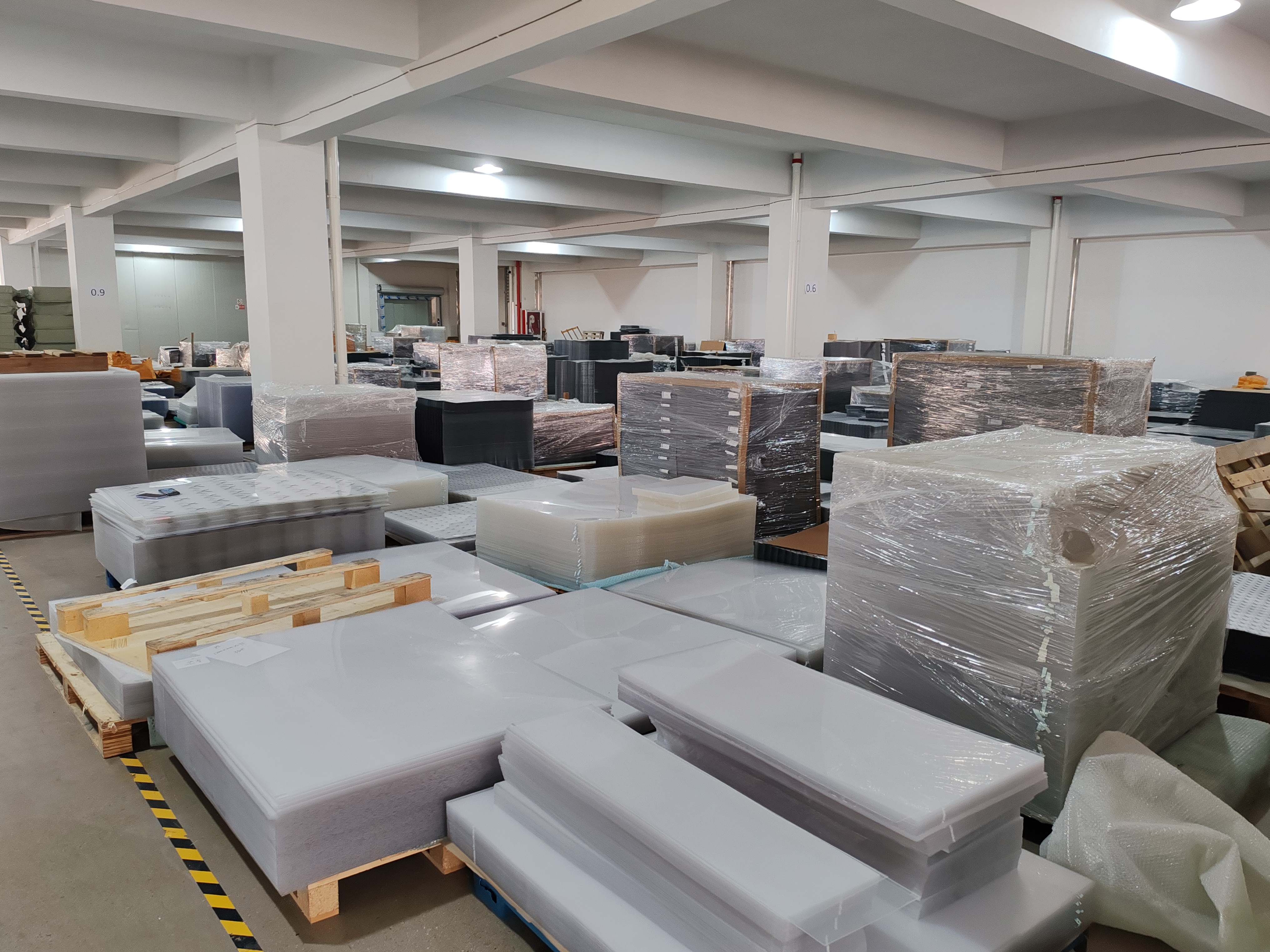
Zhejiang Yifang New Materials, as the source factory, produces high-quality cast acrylic sheets with high molecular weight and stable structure. After laser cutting and CNC engraving processing, the deformation is small and the dimensional stability is good. The company supports size customization, thickness customization, and provides full process processing services such as laser cutting, CNC engraving, and hot bending forming.
| product type | pet、ps、acrylic、acrylic mirror、pvc sheet,acrylic sheet |
| thickness | 0.35-300mm |
| Styles | 1220*2440,1220*1830,500*900,50*60,960*1950,700*900/Customization of various specifications and sizes |
| delivery time | 5-8day |
| manufacture | Yifang |
related products