Does the thickness of acrylic affect the glass transition temperature Scientific interpretation and procurement guide
$1.15 available: In StockQuick Overview: Zhejiang Yifang New Materials, with 20 years of production and processing, international standards, and a daily output of 70 tons.
Does the thickness of acrylic affect the glass transition temperature? Scientific interpretation and procurement guide
In the procurement and technical consultation of acrylic sheets, we often encounter the question: "Are 2mm sheets and 20mm sheets the same in heat resistance? Is thick plate more prone to deformation? ”Behind such issues is actually a misunderstanding of the relationship between "glass transition temperature (Tg)" and "sheet thickness".
Many buyers believe that thick plates are more "heat-resistant" than thin plates, or that thick plates have a higher Tg. The fact is quite the opposite - Tg is an intrinsic property of the material, and thickness does not change it. But thickness does affect the actual performance of materials near Tg, including heating time, temperature uniformity, and thermal deformation behavior. This article will provide a clear interpretation of the relationship between acrylic Tg and thickness from both scientific principles and practical applications, and offer practical procurement and processing recommendations.
The scientific definition of Tg
The glass transition temperature (Tg) refers to the temperature at which amorphous polymers (such as acrylic) transition from a glassy state to a highly elastic state. Below Tg, molecular chains are "frozen" and the material is hard and brittle; Above Tg, molecular segments begin to move and the material becomes soft and malleable.
For acrylic (PMMA), its Tg is approximately 105 ℃. This is determined by the molecular structure of PMMA - the rigidity of the main chain, the volume and polarity of the side groups (ester groups) jointly determine this temperature value.
Why is Tg a 'range' rather than a 'point'?
Tg is not an exact 'point', but a temperature range (usually ± 2-5 ℃). This is because factors such as the molecular weight distribution of polymers, testing methods (DSC, DMA), and heating rate can all affect the test results. The commonly accepted reference value in the industry is 105 ℃± 2 ℃.
The relationship between Tg and molecular weight
The Tg of acrylic is related to its molecular weight - the higher the molecular weight, the higher the Tg is usually. The molecular weight of cast plates can reach 100000-150000 g/mol, while extruded plates have a molecular weight of approximately 60000-80000 g/mol. Therefore, the Tg and heat resistance of cast plates are usually better than extruded plates. But the thickness does not change the molecular weight, so it does not change Tg.
Tg has important guiding significance throughout the entire lifecycle of acrylic:
Application in procurement selection
Understanding Tg can help buyers determine whether the board is suitable for a specific temperature environment. For example, outdoor billboards can reach a surface temperature of 60-70 ℃ under high temperatures in summer. Although it is lower than Tg (105 ℃), it is close to the heat deformation temperature (96 ℃). Therefore, outdoor applications should choose new material casting boards with added UV resistant components, and consider increasing the thickness appropriately to enhance deformation resistance.
Application in processing technology
Hot bending forming: The heating target temperature is about 95-105 ℃ (near Tg), allowing the material to enter a high elastic state before forming.
Laser cutting: It belongs to instantaneous high-temperature processing and usually does not cause the overall Tg to reach, but the local temperature is extremely high, requiring power control to prevent edge burning.
Drilling/CNC machining: It belongs to cold machining, but the frictional heat generated by high-speed cutting may cause local temperatures to approach Tg, leading to "sticking" or "melting" phenomena, and requires cooling measures.
Application in the use of products
The use temperature of acrylic products must be much lower than Tg to ensure long-term dimensional stability. The maximum continuous operating temperature varies between 65 ℃ and 95 ℃ depending on the working conditions. Beyond this temperature range, the material will gradually deform and its performance will decrease.
Characteristics of reference Tg values for acrylic types
Ordinary cast PMMA board at 105 ℃± 2 ℃ is mainstream in the market and suitable for most indoor and outdoor scenarios
Ordinary extruded PMMA board has a lower molecular weight at around 100-105 ℃ and slightly inferior heat resistance compared to cast board
Heat resistant PMMA modified by copolymerization at 100-145 ℃, suitable for high temperature scenarios
Oriented organic glass undergoes tensile orientation at approximately 105 ℃, resulting in improved mechanical properties while maintaining a constant Tg
The Influence of Thickness on Tg: Core Conclusion
The thickness does not change the Tg. The theoretical Tg values of 2mm and 50mm plates are the same because they are the same material.
The thickness affects the heat conduction time. In the actual heating process, it takes longer for the core temperature of the thick plate to reach Tg. The insulation time of the casting board can be calculated as 1.5-2 minutes per millimeter thickness. For example, a 10mm thick board needs to be insulated at 140 ℃ for 15-20 minutes to achieve sufficient softening of the core.
The thickness affects the thermal deformation performance. At the same temperature, thin plates are more likely to reach Tg and undergo deformation as a whole than thick plates, because thin plates have a smaller heat capacity and a faster heating rate. However, when the thick plate is heated unevenly, the temperature difference between the surface and the core is greater, which can easily generate internal stress and lead to cracking.
Is the Tg of 2mm board and 10mm board the same?
same. Tg is an intrinsic property of a material, determined by its molecular structure and molecular weight, and is independent of the thickness of the sheet. The theoretical Tg values of 2mm and 10mm boards produced by the same batch of raw materials and process are exactly the same.
Q2: Is thick plate more heat-resistant than thin plate?
This is a common misconception. The Tg of thick plates is not higher than that of thin plates, and both will soften after reaching Tg. However, in practical use, thick plates may exhibit better "deformation resistance" under short-term high-temperature impacts due to their large heat capacity and slow heating. But this is not a change in Tg, but a difference in thermal conductivity.
Q3: Why are thick plates more prone to problems during hot bending?
During the hot bending of thick plates, the surface first reaches Tg and becomes soft, while the core may still be in a glassy state. This temperature gradient can cause inconsistent internal and external deformation, resulting in internal stress, and is prone to cracking or rebounding after cooling. The solution is to use a multi zone independent temperature controlled oven, slowly raise the temperature (5-10 ℃/min), and extend the insulation time.
Q4: At what temperature does acrylic begin to deform?
Acrylic may begin to undergo slight deformation within the continuous use temperature range of 65-95 ℃. The hot deformation temperature is about 96 ℃ (under a pressure of 1.82MPa). The Vicat softening point is approximately 113 ℃. Acrylic products should be avoided from being placed in an environment above 80 ℃ for a long time in daily use.
Q5: How to choose acrylic sheet according to the usage temperature?
Indoor ambient temperature environment (<50 ℃): Both ordinary cast board and extruded board are acceptable
Semi outdoor/temperature rise environment (50-80 ℃): It is recommended to use cast plates (high molecular weight, good thermal stability)
High temperature environment (80-100 ℃): It is recommended to use heat-resistant PMMA (Tg>110 ℃)
Exceeding 100 ℃: It is necessary to evaluate whether acrylic is suitable for use, or consider other materials such as PC
Q6: What is the heat resistance quality of our factory's acrylic sheet?
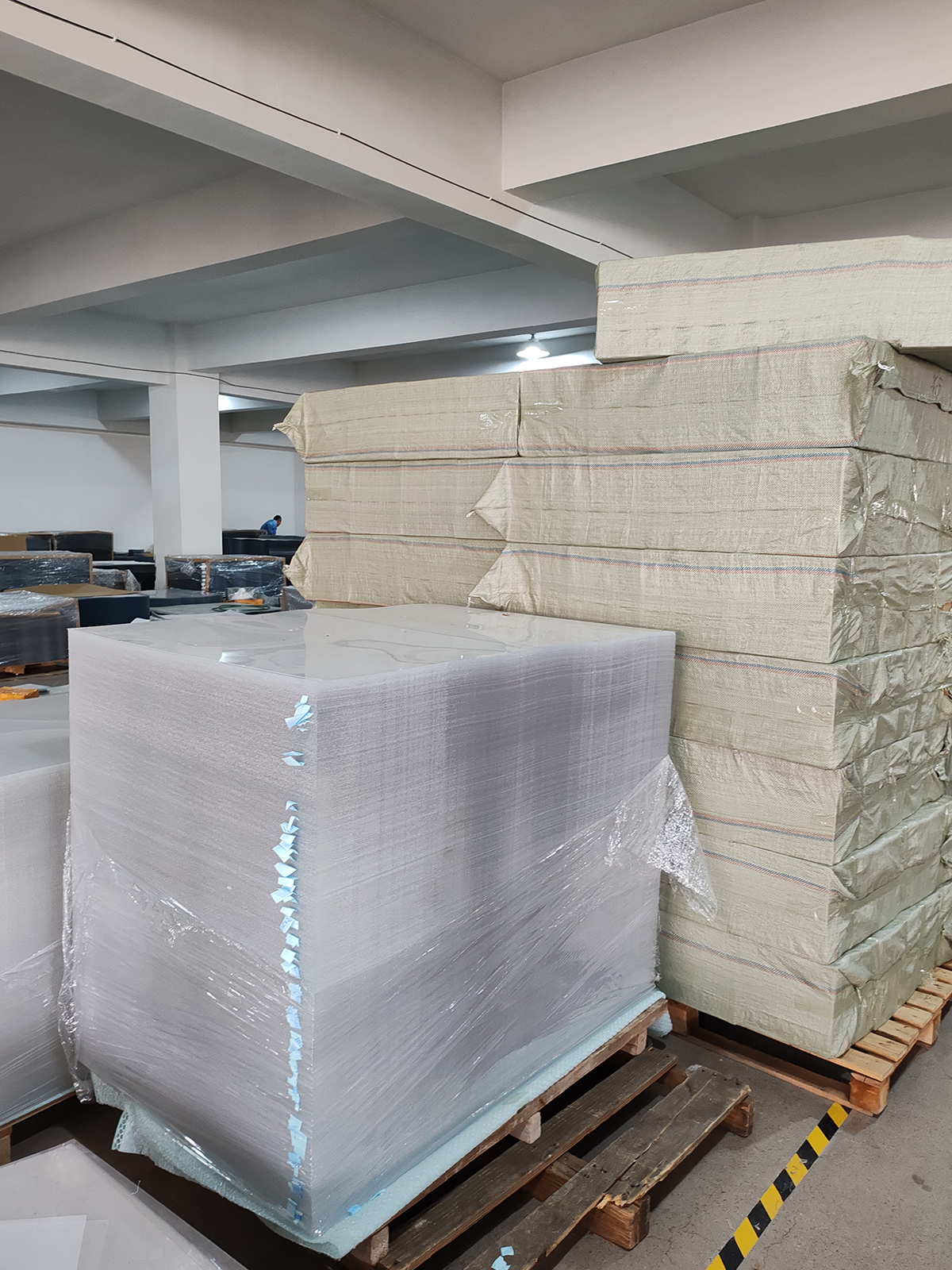
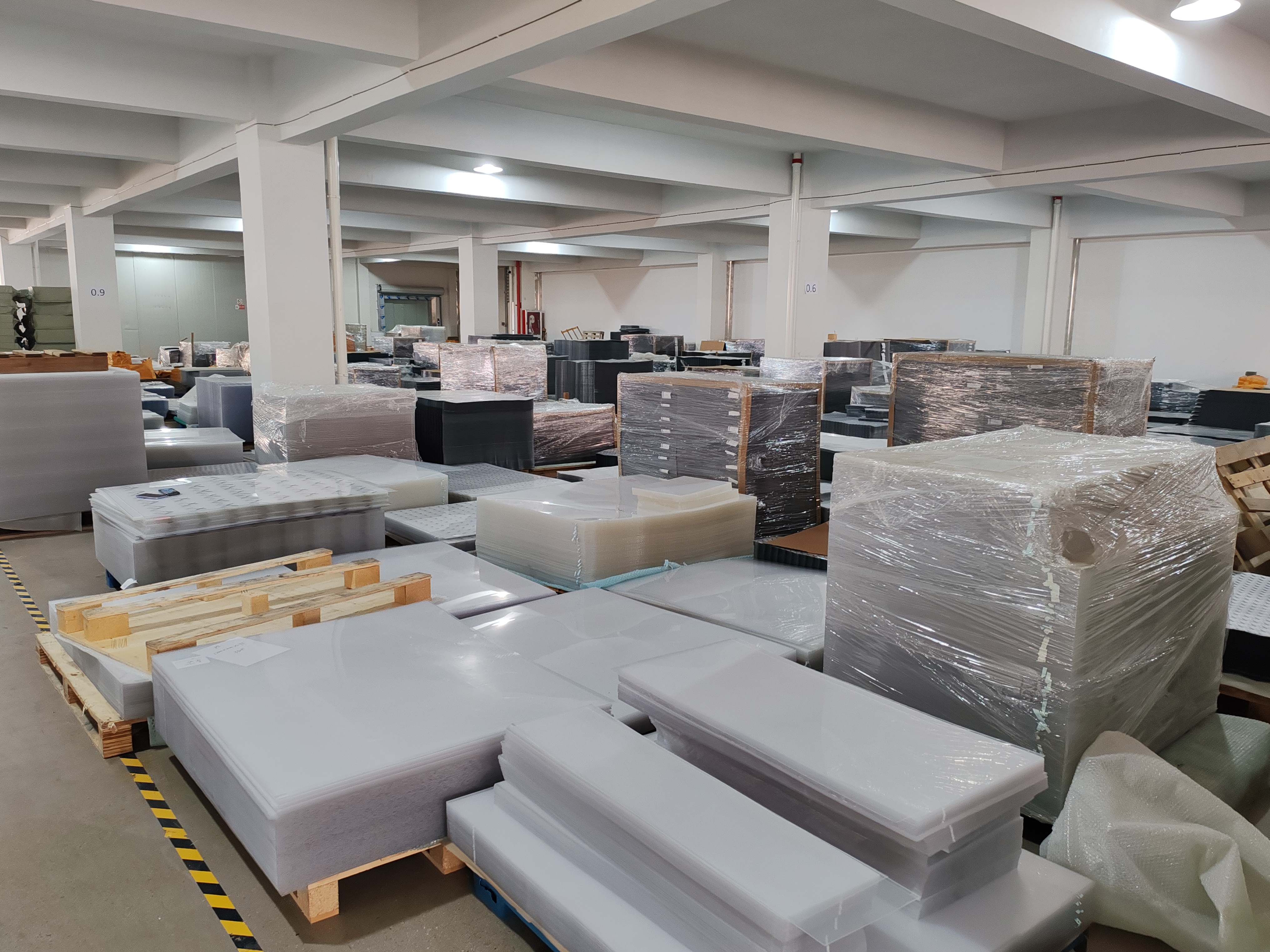
The cast acrylic sheets produced by Zhejiang Yifang New Materials use high-quality PMMA raw materials, with a stable Tg of around 105 ℃, which meets the industry's standards for superior products. The casting process endows the sheet with high molecular weight (100000-150000 g/mol), exhibiting better dimensional stability and creep resistance in the temperature range close to Tg.
| product type | pet、ps、acrylic、acrylic mirror、pvc sheet,acrylic sheet |
| thickness | 0.35-300mm |
| Styles | 1220*2440,1220*1830,500*900,50*60,960*1950,700*900/Customization of various specifications and sizes |
| delivery time | 5-8day |
| manufacture | Yifang |
related products