How high temperature is required for acrylic processing
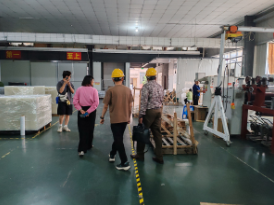
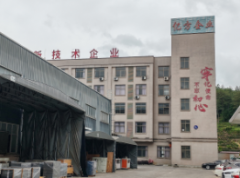
$1.15 available: In StockQuick Overview: Zhejiang Yifang New Materials, with 20 years of production and processing, international standards, and a daily output of 70 tons.
How high temperature is required for acrylic processing
In the acrylic processing industry, temperature control is one of the core factors determining product quality. Whether it is hot bending, laser cutting, or injection molding, acrylic needs to be heated to a specific temperature range. When the temperature is low, the material cannot flow and form, and when the temperature is high, it will decompose, turn yellow, or even burn.
So, how high does acrylic processing require? What are the differences in temperature requirements for different processing techniques? Mastering these temperature parameters is the key to ensuring processing quality, improving yield, and reducing scrap rates. This article will start from the concept of the melting point of acrylic and systematically introduce the temperature requirements and precautions for various processing techniques.
Before discussing the "melting point" of acrylic, it is important to first understand an important concept - acrylic is a thermoplastic that does not have a clear "melting" temperature point like metals, but has a wide range of softening melting decomposition temperatures. The following are key temperature indicators:
Explanation of Temperature Index Value Range
Melting point: 130-150 ℃. The material begins to melt and flow within this temperature range
The minimum temperature at which the material reaches a flowable state is at a starting flow temperature of approximately 160 ℃
The melting processing temperature range is 160-200 ℃, which is suitable for the processing temperature range of injection molding and extrusion
Melting temperature (injection molding) 170-260 ℃ Melting temperature range in injection molding processing
If the thermal decomposition temperature exceeds 270 ℃, the material will decompose and turn black
There are slight differences in the melting point of acrylic according to data from different sources. The encyclopedia data shows that the melting point is about 150 ℃, and there are also materials that provide data of about 105 ℃ or 130-140 ℃. This difference is mainly due to the different molecular weights of PMMA - the higher the molecular weight, the higher the melting point. For processing practice, what is more worth paying attention to is not a single "melting point", but the temperature at which the material begins to soften and the melting range that can be processed.
Summary of key points: The melting processing temperature of acrylic is generally between 160-200 ℃, with a starting flow temperature of about 160 ℃ and a starting decomposition temperature above 270 ℃. There is a wide processing window of about 100 ℃. The thermal stability of cast plates is usually better than that of extruded plates, making them more suitable for precision machining.
Understanding the melting point and related thermal properties of acrylic has important application value in the following processing scenarios:
1. Hot bending forming
Hot bending molding is the process of heating an acrylic sheet to a softening temperature (approximately 140-180 ℃), placing it in a mold to adhere to the mold surface, and cooling it before shaping. This is a common technique for making curved display stands, curved light box panels, and irregular decorative parts.
During hot bending processing, the baking temperature needs to be controlled at around 160-170 ℃, and the heating time generally ranges from a few minutes to several tens of seconds. Excessive temperature can cause bubbles or discoloration on the surface of the board, while insufficient temperature can prevent it from bending to the desired curvature. It is particularly important to note that thicker sheets require longer heating times, but the maximum temperature should not exceed their thermal decomposition temperature (above 270 ℃).
2. Laser cutting
CO ₂ laser cutting is one of the mainstream methods for acrylic processing, and precise temperature control is particularly important. During laser cutting, high-energy light spots instantly vaporize acrylic. Low cutting power can result in incomplete cutting, while high power can burn the edges.
Acrylic sheets of different thicknesses have different requirements for laser power: 3mm thickness is about 60-80W, 5mm thickness is about 80-100W, and 8-10mm thickness is about 120-150W. As laser cutting belongs to instantaneous high-temperature processing, it usually does not reach the thermal decomposition temperature above 270 ℃, so the cutting edge is smooth like a mirror and does not require subsequent polishing treatment. But a good smoke exhaust system must be equipped during the cutting process to promptly remove the smoke generated by thermal decomposition.
3. Injection molding
Injection molding is the process of heating and melting acrylic particles, injecting them into the mold cavity, cooling them, and demolding them to obtain the product. The melting temperature of acrylic is generally set at 170-260 ℃, and the mold temperature is controlled at 50-80 ℃.
Before injection molding, the raw materials need to be dried at 80-90 ℃ for 3-4 hours to remove moisture and prevent the formation of bubbles during injection molding. Increasing the molding pressure and temperature can significantly reduce the viscosity of the melt, resulting in better fluidity of the melt. Dark colored acrylic absorbs more heat during the injection molding process than light colored materials, making it more prone to overheating during processing. Therefore, it is necessary to adjust the parameters appropriately to prevent overheating.
4. Blow molding
Acrylic is also an important raw material for blow molding, used in the production of hollow containers or complex components. Its thermal performance requirements are similar to injection molding, requiring the material to be heated to a molten state and then bonded to the mold through air pressure expansion.
5. CNC machining
CNC machining (CNC cutting, drilling, etc.) belongs to cold machining and usually does not involve active heating, but the heat generated by friction during high-speed cutting may also cause the material to approach the softening temperature. If the spindle speed is too high and the feed rate is not appropriate, frictional heat can cause the acrylic surface to melt, fuzz, or warp. Therefore, proper cooling methods (such as air cooling or spray cooling) should be used to dissipate heat during CNC machining to maintain dimensional accuracy.
The melting characteristics of acrylic are closely related to its product features and usage scenarios:
1. Physical basis of heat resistance
The heat resistance of acrylic is determined by its molecular structure, with a glass transition temperature (the temperature at which the material transitions from a glassy state to a highly elastic state) of approximately 100-110 ℃ and a thermal deformation temperature of approximately 96 ℃ (under a pressure of 1.18MPa). The Vicat softening point (the temperature at which the material begins to soften significantly) is approximately 113 ℃.
This means that acrylic products can work continuously between 65-95 ℃, but should avoid long-term exposure to high temperatures above 80 ℃. The temperature range that acrylic sheets can withstand is between -40 ℃ and+104 ℃.
2. The correlation between thickness and heat-resistant deformation
The thinner the board, the easier it is to deform when heated; The thicker, the smaller the deformation. This is because thinner sheets have a smaller heat capacity, and when locally heated, the temperature rises faster, making it easier to reach the softening point. When applied outdoors on a large scale, it is recommended to choose boards with sufficient thickness (preferably 5mm or more) and reserve expansion and contraction gaps for thermal expansion and contraction.
3. Differences in thermal performance between cast and extruded plates
Cast acrylic is formed by slowly polymerizing liquid monomers in glass molds, with longer and more uniform molecular chains, making it more thermally stable than extruded sheets and more suitable for scenarios that require high-temperature processing or long-term heat resistance. Although extruded sheets have smaller thickness tolerances and are suitable for mass production, they are more prone to deformation when heated and have slightly lower heat resistance than cast sheets.
4. UV resistance and thermal aging
In addition to direct thermal deformation, ultraviolet radiation and high temperature can accelerate the aging process of acrylic, causing changes in its molecular structure, surface discoloration or yellowing, and a decrease in physical properties. Therefore, acrylic products used outdoors should not only choose UV resistant sheets, but also avoid long-term exposure to extreme high temperature environments.
5. Comparison of heat resistance with glass
The temperature resistance range of tempered glass is -200 ℃ to 350 ℃, and it can withstand 500 ℃ in the short term, which is much better than acrylic. But the impact strength of acrylic is 2-3 times that of tempered glass, with a light transmittance of up to 93%, and its weight is only half that of glass. Therefore, in scenarios that require impact resistance and lightweight, even if the heat resistance is slightly inferior, acrylic is still a better choice.
Q1: At what degree will acrylic board soften and deform?
Acrylic sheets begin to deform slightly at around 70 ℃ and soften noticeably when the temperature approaches 100 ℃. The hot deformation temperature is about 96 ℃ (under a pressure of 1.18MPa), and the Vicat softening point is about 113 ℃. The surface temperature of dark colored acrylic sheets under direct sunlight in summer can reach 60-70 ℃, approaching the critical point of deformation. Therefore, for outdoor use, light colored sheets should be selected and UV resistant components should be added.
Q2: What is the upper limit of continuous use temperature for acrylic sheets?
The continuous working temperature range of acrylic sheet is generally between 65-95 ℃, which varies with different working conditions. If higher temperatures need to be withstood, the method of copolymerizing monomers with propylene methacrylate can be used to improve heat resistance. The thermal deformation temperature of partially heat-resistant PMMA resin can reach over 100 ℃.
Q3: At what temperature does acrylic burn?
Acrylic is a combustible material with a flash point of about 250 ℃ and a thermal decomposition temperature of about 270 ℃. When burning, the flame appears blue and white at the top, emitting a strong odor of flowers, fruits, and rotten vegetables. Keep away from sources of fire and high temperature during processing and use.
Q4: Is it safe to use acrylic products outdoors in summer?
The surface temperature of acrylic under direct sunlight in summer may exceed 60 ℃, especially for dark colored boards that absorb more heat. Although the upper limit of continuous working temperature for acrylic is 65-95 ℃, there is still a certain risk of deformation under such extreme conditions. It is recommended to choose acrylic sheets with added anti UV components for outdoor use. Light colors should be preferred to reduce heat absorption, and a thickness of 5mm or more should be chosen to enhance deformation resistance.
Q5: How to control the temperature during acrylic hot bending processing?
During hot bending processing, the oven temperature is generally controlled at around 160-170 ℃, and the heating time depends on the thickness of the sheet - about 2-5 minutes for 3-5mm thin sheets and 5-10 minutes for 8-10mm thick sheets. When the board becomes soft and droops during the heating process, it can be taken out and bent. If the temperature is too low, it will not bend or rebound, while if the temperature is too high, it will cause surface bubbling and edge melting deformation. It is recommended to use waste materials for temperature testing before hot bending to determine the optimal parameters before formal processing.
Q6: What are the advantages of our factory in acrylic processing?
Our factory has rich experience and technical accumulation in acrylic processing:
Professional processing equipment: equipped with high-precision CO ₂ laser cutting machine (cutting accuracy ± 0.01mm), CNC machining center, hot bending forming equipment, screen printing equipment and other complete processing equipment, supporting customized processing from sheet metal to finished products.
Accurate process control: We have accumulated a complete processing parameter database for acrylic materials of different thicknesses and colors, ensuring that each batch of products is processed under optimal temperature conditions with stable and reliable quality.
100% brand new material guarantee: All acrylic products are produced using high-quality PMMA brand new raw materials, with a light transmittance of ≥ 92%, excellent thermal stability, and are not prone to bubbles and cracks during processing.
One stop customization service: Customers only need to provide drawings, and we can complete the entire process from cutting, carving, hot bending to screen printing. Sampling takes 1-3 days, and mass production takes 3-10 days for efficient delivery.
| product type | pet、ps、acrylic、acrylic mirror、pvc sheet,acrylic sheet |
| thickness | 0.35-300mm |
| Styles | 1220*2440,1220*1830,500*900,50*60,960*1950,700*900/Customization of various specifications and sizes |
| delivery time | 5-8day |
| manufacture | Yifang |
related products