Reasons and treatment methods for yellowing of acrylic sheets a complete analysis from principle to repair
$1.15 available: In StockQuick Overview: Zhejiang Yifang New Materials, with 20 years of production and processing, international standards, and a daily output of 70 tons.
Reasons and treatment methods for yellowing of acrylic sheets: a complete analysis from principle to repair
Acrylic sheet is widely used due to its high transparency, good processing performance, and excellent weather resistance. However, many users have found that the originally crystal clear acrylic board gradually turns yellow after using it for a period of time, which not only affects its appearance but may also reduce its light transmittance and mechanical properties. What's even more confusing is that some boards remain as shiny as new even after ten years of use, while others start to turn yellow after six months.
Yellowing of acrylic sheets is not "inevitable", as it involves multiple factors such as material science, production processes, and usage environment. Understanding the principle, common situations, and coping methods of yellowing can not only help you choose the right board, but also take effective repair measures after yellowing occurs. This article will systematically summarize the complete knowledge system of yellowing of acrylic sheets from four dimensions: yellowing principle, common situations, outdoor performance, and common problems.
The essence of yellowing of acrylic sheet is the aging phenomenon of polymer materials, and its core mechanism can be summarized as the "photo oxygen synergistic effect".
1. Ultraviolet radiation is the "culprit" of yellowing
The main reason for the yellowing of acrylic sheets is exposure to ultraviolet radiation. The energy of ultraviolet radiation is sufficient to break the chemical bonds of organic compounds, triggering a series of chain scission reactions. When sunlight shines on the surface of acrylic, ultraviolet rays are absorbed by the sheet, causing structural changes at the molecular scale - degradation and cross-linking of molecular chains.
2. Molecular chain breakage and generation of chromophores
Under the action of ultraviolet radiation, the chemical bonds in acrylic molecules are broken, leading to photooxidation reactions. The decomposition reaction leads to a decrease in molecular weight, accompanied by the production of a large number of color generating groups such as carbonyl groups. These conjugated structures can absorb visible light, resulting in the board appearing yellow. Simply put, the originally transparent molecular structure of acrylic is disrupted to form "colored" chemical groups, which visually appear yellow.
3. The "accomplice" effect of oxygen
The photo oxidation reaction is not the result of UV radiation alone - oxygen in the air participates in the reaction. A series of experiments have shown that the aging of organic glass under light is mainly caused by the participation of oxygen in the air, leading to the breakage of the main chain of organic glass. This is also one of the reasons why acrylic exposed outdoors is more prone to yellowing than those stored indoors.
4. Accelerated effects of temperature and humidity
High temperature can accelerate the aging process of acrylic sheets, leading to yellowing. According to the kinetics of polymer decomposition reactions, the rate of molecular chain breakage increases under high temperature conditions. Humidity also has an impact - the ester groups in acrylic will undergo hydrolysis reaction when exposed to water, leading to the breakage of the main chain. When temperature, humidity, and ultraviolet radiation are coupled, the yellowing rate will significantly accelerate.
5. The purity of raw materials is the "source" of yellowing
The raw material of PMMA is methyl methacrylate, which usually has a purity of over 99.9%, but impurities below 0.1% have a significant impact on the color of PMMA. The purity of the raw materials is too low and contains a lot of impurities, which increases the risk of yellowing. The board containing recycled materials has extremely poor UV resistance due to the mixing of aged PMMA and impurities in the raw materials, and it turns yellow significantly within six months.
There is not only one manifestation of yellowing of acrylic sheets, and yellowing caused by different reasons varies in characteristics, speed, and repairability:
1. UV aging yellowing
This is the most common type, manifested as the overall or surface of the board gradually turning yellow and the transparency decreasing. Brand new UV resistant panels will only show significant yellowing outdoors after 5-10 years; The board containing recycled materials will visibly turn yellow within six months outdoors. This yellowing is an irreversible molecular structural change that cannot be restored through simple cleaning.
2. Surface pollution type yellowing
Acrylic sheets can also turn yellow under prolonged accumulation of dust, debris, and improper cleaning and maintenance. This yellowing usually only exists on the surface and can be restored after wiping with a cleaning agent. Surface pollutants such as oil fumes, dust, etc. may also exacerbate yellowing after reacting with ultraviolet radiation.
3. Chemical erosion type yellowing
Acrylic sheets that come into contact with certain chemicals, such as cleaning agents containing organic solvents, may undergo chemical reactions that can cause the color to turn yellow. The chloride used for swimming pool disinfection will undergo chlorination reaction when in contact with acrylic, causing its surface to turn yellow. This yellowing usually presents as localized patches.
4. High temperature accelerated yellowing
Acrylic sheets will undergo changes in molecular structure under prolonged high temperature environments, leading to material aging. Improper temperature control during the processing can also lead to yellowing. High temperature itself can accelerate oxidation reactions, and the effect is more pronounced when combined with ultraviolet radiation.
5. Yellowing of inferior raw material types
The board produced using recycled materials or low purity PMMA raw materials, without adding UV resistance or antioxidants, has a high risk of yellowing from the factory. The cross-section of the recycled sheet turns yellow, and even after treatment with fluorescent whitening agents, its essence will be exposed in the short term.
4、 Outdoor situation where acrylic sheet turns yellow
The outdoor environment is the "hardest hit area" for the yellowing of acrylic sheets, as four aging factors including ultraviolet radiation, oxygen, humidity, and temperature are simultaneously at work.
1. Time difference in outdoor yellowing
The yellowing speed of acrylic sheets of different grades varies greatly outdoors:
Brand new material+UV resistant formula casting board: outdoor 5-10 years without yellowing or fading. By adding high concentration ultraviolet absorbers, long-term weather resistance can be maintained.
Ordinary acrylic board (without UV resistance): It begins to visibly yellow after about 3 years outdoors.
Recycled board: visibly yellowed, faded, and cracked within six months outdoors.
2. Key factors contributing to outdoor yellowing
Outdoor yellowing is mainly affected by the following factors:
UV intensity: UV has the most severe impact on PMMA sheets and is the primary factor causing outdoor yellowing
Light duration: With the increase of light duration, the degree of surface aging of organic glass will also increase
Temperature conditions: High temperature will accelerate the rate of molecular chain breakage
Humidity conditions: Water vapor can cause molecular chain hydrolysis
Raw material purity: The higher the impurity content, the greater the risk of yellowing
3. Core measures for outdoor anti yellowing
For acrylic products used outdoors, the following measures are crucial:
Choose UV resistant sheet: There are acrylic sheets on the market that are specially added with UV resistant agents, which can effectively resist the effects of ultraviolet radiation
Adding UV absorbers: Adding anti UV agents during the production process can delay yellowing
Using protective coating: Applying ultraviolet protective coating on the surface of acrylic board can effectively block the invasion of ultraviolet rays
Reasonably design installation location: avoid direct exposure to high temperatures and strong ultraviolet radiation
Q1: Will acrylic sheets always turn yellow?
Not necessarily. Cast boards made of 100% brand new materials with sufficient UV absorbers added, will not yellow for 5-10 years outdoors. But if inferior boards containing recycled materials are used, they will visibly turn yellow within six months. Choosing high-quality boards is the key to avoiding yellowing from the source.
Q2: Can acrylic board recover after yellowing?
Depending on the type and degree of yellowing:
Surface pollution type yellowing: can be cleaned and restored with a cleaning agent
Slight aging yellowing: can be improved by grinding, polishing, and other methods
Severe aging yellowing: The yellowing has penetrated deep into the interior of the board and cannot be fully restored
Q3: How to deal with yellowed acrylic sheets? What are some tips?
Here are several commonly used processing methods:
Mild yellowing (surface stains/slight oxidation)
Toothpaste wiping method: brush a small amount of toothpaste with soft foam, gently wipe the yellowing area, and then rinse with water
Special cleaning agent: Use specialized acrylic cleaning agent, dilute according to the instructions, and wipe with a soft cloth
Moderate yellowing (surface aging layer)
Physical polishing method: Use fine sandpaper (1000 grit or more) to gently polish the yellowed surface, rinse and dry with clean water after polishing. Attention: Polishing will slightly reduce the thickness of acrylic, and excessive polishing is not recommended
Polishing treatment: Polish with polishing agent after polishing to restore luster
Severe yellowing (overall aging)
Spray paint of similar color: If it cannot be wiped off and a large area turns yellow, you can evenly apply paint of similar color
Replace the new board: If it has already turned completely yellow, it is recommended to replace it directly
Caution: Do not use highly irritating chemical solvents; Avoid excessive scrubbing to prevent scratching of the board; Test in a small, inconspicuous area before cleaning.
Q4: How to prevent acrylic sheets from turning yellow?
We can start from the following aspects:
Avoid direct sunlight: Try to place the acrylic board in a dark place or use curtains and sun visors to reduce UV exposure
Choose UV resistant sheets: For outdoor applications, prioritize acrylic sheets with added UV resistant agents
Regular cleaning: Clean regularly with mild soapy water and a soft cloth to remove accumulated dust and dirt
Avoid high temperature environment: Ensure that the acrylic board is kept away from heat sources
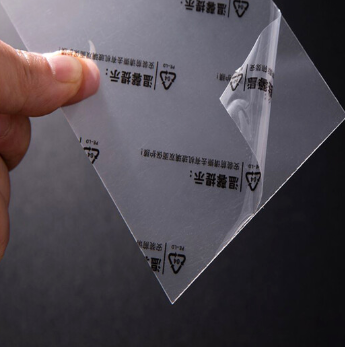
Use protective film: Apply a protective film on the surface to isolate UV rays and pollutants
Q5: What is the difference in yellowing between new and recycled sheets?
The difference is very obvious:
Comparison item: New sheet metal, recycled sheet metal
The cross-sectional color is transparent, colorless, and noticeably yellowish
Excellent UV resistance, extremely poor with added UV absorbers, not added or insufficiently added
Outdoor yellowing time 5-10 years within 6 months
Cutting has a low odor, less smoke, a pungent odor, and more smoke
Q6: What are the advantages of Zhejiang Yifang in resisting yellowing?
The cast acrylic sheets produced by Zhejiang Yifang New Materials are made from 100% high-quality PMMA raw materials and do not contain any recycled materials. Adding sufficient ultraviolet absorbers during the processing of the board can maintain color stability even after long-term use under strong ultraviolet radiation. The outdoor service life can reach 8 to 10 years without yellowing or hydrolysis
| product type | pet、ps、acrylic、acrylic mirror、pvc sheet,acrylic sheet |
| thickness | 0.35-300mm |
| Styles | 1220*2440,1220*1830,500*900,50*60,960*1950,700*900/Customization of various specifications and sizes |
| delivery time | 5-8day |
| manufacture | Yifang |
related products