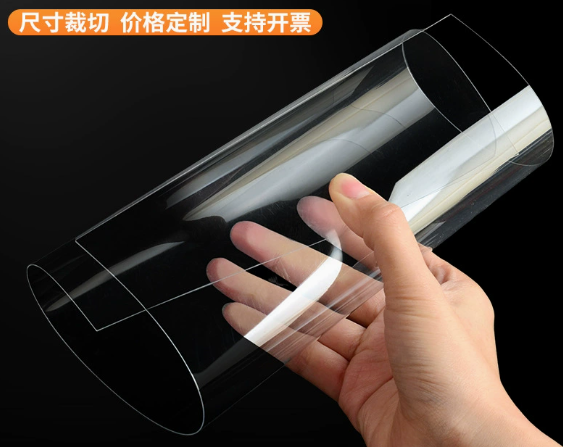
Types and characteristics of 4mm cast acrylic sheets teaching you to distinguish between good and bad
$1.15 available: In StockQuick Overview: Zhejiang Yifang New Materials, with 20 years of production and processing, international standards, and a daily output of 70 tons.
Types and characteristics of 4mm cast acrylic sheets - teaching you to distinguish between good and bad
4mm cast acrylic board is one of the most widely used specifications in commercial procurement, but the quality of products on the market varies greatly - some labeled as "4mm cast board" have a light transmittance of up to 98%, while others turn yellow and blue; Some outdoor areas remain as bright as new even after ten years of use, while others develop cracks within six months. Learning to distinguish the quality of 4mm cast plates is the first step in precise procurement.
Faced with the dazzling array of 4mm cast boards on the market, how to determine which ones are genuine cast boards and which ones are fake extruded boards? How to identify new and recycled materials? This article will provide you with a complete set of quality identification guidelines for 4mm cast acrylic sheets from four dimensions: types, characteristics, identification methods, and common problems.
The classification system for 4mm cast acrylic sheets is very comprehensive, and can be mainly divided from the following dimensions:
Classified by transmittance
Transparent board: The light transmittance can reach 92% -98%, colorless and transparent, with soft light and clear vision. It is the most common type in 4mm thickness
Translucent board: including dyed transparent board and frosted board, presenting a soft texture when light passes through
Color palette: including black and white and color palette, full body coloring, color stability
Classified by performance
Impact resistant board: Excellent impact resistance, suitable for safety protection scenarios
UV resistant board: designed for outdoor use with added UV absorbers
Ordinary board: meets conventional indoor needs
Special boards: high impact resistant board, flame-retardant board, frosted board, metal effect board, high wear-resistant board, light guide plate, etc
Classified by surface effect
4mm cast board offers a variety of surface effect options - glossy (high gloss, good glossiness), frosted surface (matte texture, transparent and opaque), mirror surface (with coated reflective layer), textured surface (special textures such as marble and wood grain).
Positioning of 4mm in the thickness system
The conventional thickness range for casting acrylic is between 1mm and 200mm, and the most common ones on the market are mainly divided into three categories: thin plate, medium thick plate, and ultra thick plate. Thin sheets (1-5mm) are suitable for lightweight display and decorative panels. 4mm is located in the upper middle position of the thin plate, which is not only more sturdy and durable than 2-3mm thin plate, but also lighter and more cost-effective than 5mm thick plate, making it the most cost-effective main specification.
The characteristics of 4mm cast acrylic sheet can be summarized from the following six aspects:
1. Ultra high transmittance -92% -98%
The light transmittance of the casting board can reach 92% -98%. A good transparent casting board emits pure light without yellowing or blurriness when illuminated with white light. This is one of the most intuitive ways to distinguish between new and recycled materials.
2. Excellent impact resistance -6-17 times that of glass
The impact strength of acrylic is 6 to 17 times that of ordinary glass. At a thickness of 4mm, it is not easily shattered even under impact, and even if damaged, it will not form sharp fragments.
3. Excellent weather resistance -8-10 years outdoors
After adding UV absorbers, the outdoor service life of transparent casting boards can reach 8-10 years. Long term outdoor use is not prone to "brittleness" phenomenon.
4. Lightweight - with a density only half that of glass
The density of acrylic is about 1.19-1.20g/cm ³, which is only half of that of ordinary glass. Lightweight and safe installation when making large external advertising light boxes.
5. Excellent processing performance - hot forming temperature of 140-180 ℃
Casting boards can be painted, silk screened, vacuum coated, as well as sawed, drilled, and machined. The hot forming temperature range is 140-180 ℃, and the hot deformation temperature is about 100 ℃.
6. Good chemical resistance
Acrylic has good weather resistance and acid and alkali resistance, and will not cause yellowing or hydrolysis due to long-term exposure to sunlight and rain.
Here are the six most practical ways to identify 4mm cast acrylic sheets:
Method 1: Look at the edge - the fundamental difference between cast and extruded boards
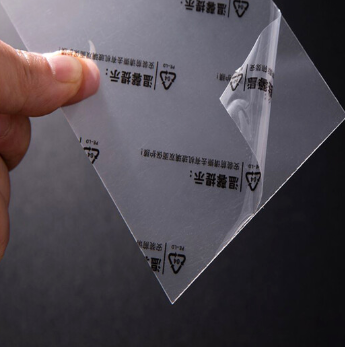
This is the most intuitive method of identification. The edges of the casting board are smooth and transparent, without any blemishes, and the edges are very transparent. Generally, the edges of the casting board are covered with adhesive film. The edges of the extruded board may have pockmarks or even turn yellow and black.
Method 2: Measuring Thickness - Beware of "Thickness Shrinkage"
Measure the thickness at the four corners and middle of the board with a caliper. The actual thickness of high-quality 4mm cast plates should be between 3.8-4.2mm. Some small manufacturers use thickness tolerance space to "steal materials", and cheap 4mm plates may only have a thickness of 3.5-3.7mm, greatly reducing their load-bearing capacity and lifespan. The thickness tolerance of the new material casting plate is stable at around 0.1mm to 0.2mm; The thickness of the return plate is unstable, with a maximum difference of up to 0.5mm.
Method 3: Transparency - Difference between Pure New Materials and Recycled Materials
Illuminate the board with white light. The light emitted by the pure new material casting board is very pure, without yellowing or blurriness. The light emitted from the recycled sheet may turn yellow or blue. The appearance color of pure new acrylic board is pure, while the appearance of recycled board is yellowish.
Method 4: Smell the cutting odor - the difference between new and recycled materials
When cutting new cast plates, there is less odor and smoke; When cutting boards containing recycled materials, there is a strong odor and a lot of smoke. Due to the fact that extruded boards are mostly made of recycled materials, there is a strong odor and smoke during cutting.
Method 5: Look at the surface - observe sand holes and water marks
The surface of the extruded board may have some sand holes (small hole shaped concave defects), and the black board will look very obvious; The casting plate will not have such a situation, but the casting plate will have water marks.
Method 6: Combustion Test - Difference between Cast Plate and Extruded Plate
Take a small piece of scrap and ignite it with fire (pay attention to safety). When the casting board burns, there is no smoke, bubbles, and no wires when extinguishing the fire. When the extruded board burns, the flame is clear, smokeless, and there are bubbles. When extinguishing the fire, the filament can be pulled out.
Quick lookup table for identification methods
Identification method: High quality cast board performs poorly/extruded board performs poorly
Look for smooth and transparent edges, no blemishes, possible blemishes, yellowing and blackening
Thickness measurement is 3.8-4.2mm, with a stable tolerance of less than 3.7mm and uneven thickness
Clear light, pure light without yellowing, yellowing or blurriness
Smell small odor, less smoke, pungent odor, more smoke
Smooth surface with no sand holes (possibly water marks) and sand holes
Smoke free and fire-extinguishing test with no smoke, no wire fire-extinguishing, and can be brushed
Q1: What is the approximate price for 4mm cast acrylic sheet?
Taking domestically produced high-quality new material casting board as an example, 4mm is about 120-180 yuan/square meter. 4mm is about 20% -40% more expensive than 3mm, but its bending rigidity is more than doubled; About 20% -30% cheaper than 5mm. The overall price of cast board is about 100-150 yuan/square meter, while extruded board is about 50-100 yuan/square meter. When purchasing, it is recommended to convert it to "yuan/square meter" and then compare horizontally, and confirm whether the quotation includes cutting fees, packaging fees, and value-added tax.
Q2: Which is better, 4mm cast plate or 4mm extruded plate?
There is no absolute 'better', it depends on the usage scenario. For outdoor use or scenarios with high requirements for weather resistance and transparency, cast boards are the only choice - extruded boards mostly do not have UV protection function, and their outdoor service life is not comparable to cast boards. The color will gradually fade and they are easily brittle. Indoor large-scale standardized application results in higher cost-effectiveness of extruded boards.
How long can a 4mm cast plate be used outdoors?
A 4mm cast board made of 100% brand new material with added UV absorbers can have an outdoor lifespan of 8-10 years. After adding ultraviolet absorbers, long-term outdoor use is less likely to cause "brittleness" phenomenon. The boards containing recycled materials will visibly yellow and fade outdoors within six months, and are not recommended for outdoor use.
What is the thickness tolerance of the 4mm cast plate in Q4?
According to the international standard ISO 7823, the tolerance calculation formula for cast plates is ± (0.4+0.1 x thickness). The tolerance of 4mm cast plate is about ± 0.8mm. The actual thickness of high-quality 4mm plate should be between 3.8-4.2mm. It is recommended to confirm the thickness tolerance range with the manufacturer in advance during procurement.
Q5: How to avoid buying 4mm boards that impersonate cast boards with extruded boards?
The cost of extruded board is 30% -50% lower than that of cast board, but it does not have UV protection function and will turn yellow within six months to a year. Identification method: Through edge recognition - the edges of the casting board are smooth, transparent, and free of pockmarks; The extruded board may have pockmarks or even turn yellow and black. At the same time, a comprehensive judgment is made by combining methods such as transparency and smelling cutting odors.
Q6: How to ensure the quality of Zhejiang Yifang 4mm cast acrylic board?
Zhejiang Yifang New Materials, as the source factory, has the following guarantees in terms of the quality of 4mm cast plates:
100% brand new material production: using high-quality PMMA brand new raw materials, without adding recycled materials, with a stable light transmittance of over 92%
Strict quality control system: certified by ISO9001 quality management system, with a stable thickness tolerance of around 0.1mm to 0.2mm
Complete specifications: Full range coverage from 1mm to 50mm thickness, standard size 1220 × 2440mm in stock
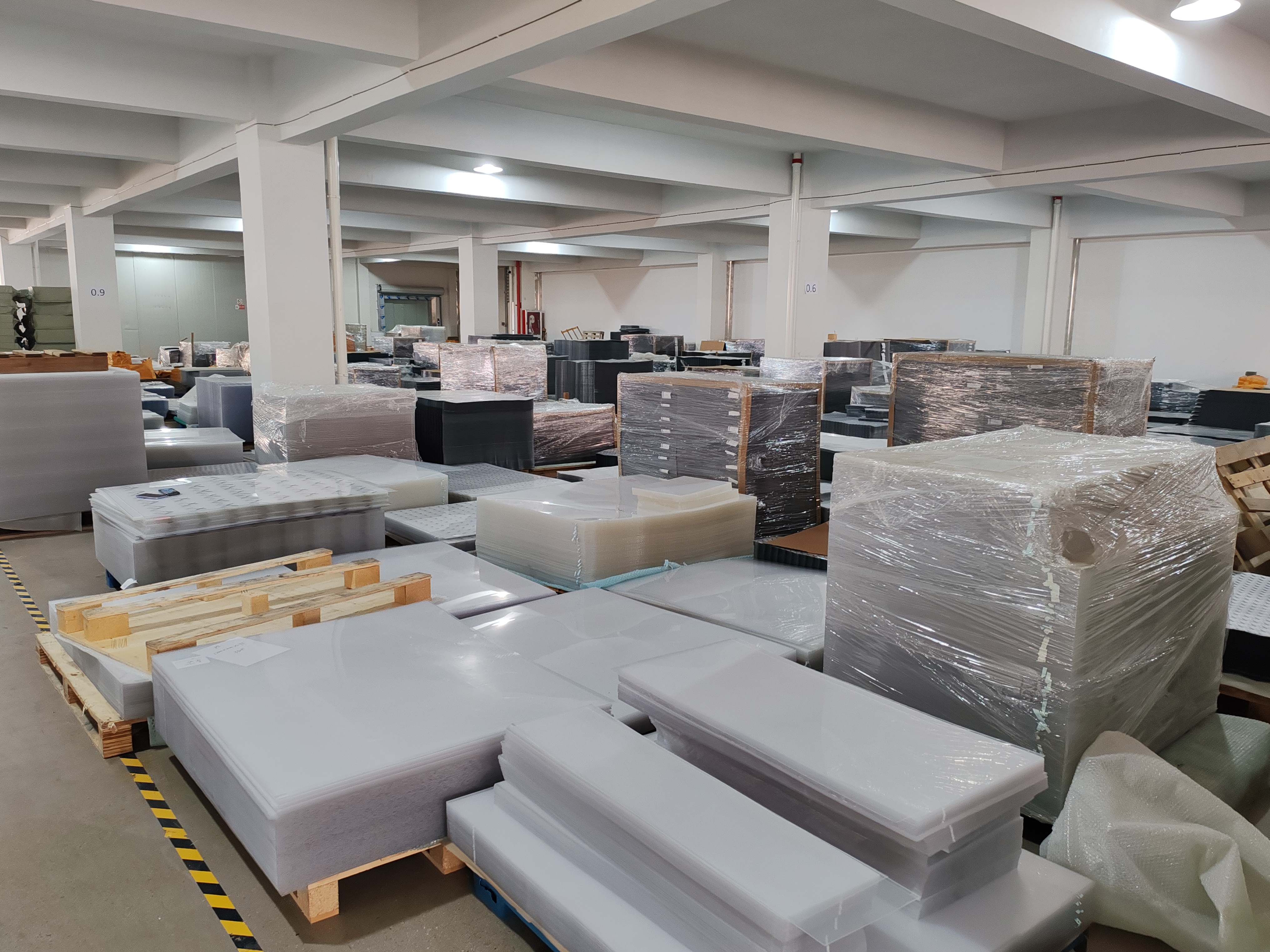
Direct supply from the source factory: 50000 square meters of production plant, 22500 tons of annual output, with the same quality and price more than 30% lower than the market
Comprehensive after-sales service: providing free samples and technical support
| product type | pet、ps、acrylic、acrylic mirror、pvc sheet,acrylic sheet |
| thickness | 0.35-300mm |
| Styles | 1220*2440,1220*1830,500*900,50*60,960*1950,700*900/Customization of various specifications and sizes |
| delivery time | 5-8day |
| manufacture | Yifang |
related products