What are the common quality issues during the processing of acrylic sheets
$1.15 available: In StockQuick Overview: Zhejiang Yifang New Materials, with 20 years of production and processing, international standards, and a daily output of 70 tons.
What are the common quality issues during the processing of acrylic sheets? (Bubbles, stress whitening, silver wire cracks, etc.)
Although acrylic sheet has excellent processing performance, various quality problems often occur in the actual processing process due to factors such as material quality, process parameters, and operating techniques. The most headache inducing issues among them are bubbles, stress whitening, and silver wire cracks - these three problems not only affect the appearance transparency of the product, but may also directly lead to the scrapping of the finished product.
Bubbles cause white voids to appear inside the transparent board, stress whitening makes the originally crystal clear acrylic hazy, and silver wire cracks spread like fine spider webs on the surface. These problems may seem complex, but as long as we understand their respective causes, we can find targeted solutions. This article will systematically review the quality issues and response strategies in the processing of acrylic sheets from four aspects: processing precautions, common processing methods, typical quality conditions, and common problems.
Quality problems in acrylic processing are often not caused by the material itself, but by a lack of control over the details during the processing. The following are some points that need special attention during processing:
1. Maintenance of cutting tools and equipment
When cutting acrylic, special cutting tools should be used to keep the blade sharp and avoid producing burrs. When carving, it is important to choose appropriate tools and parameters to avoid damaging the material. Tool passivation is one of the important causes of edge breakage and cracking.
2. Temperature control
During hot bending, the temperature should be kept uniform to avoid deformation or bubbles caused by local overheating. Insufficient temperature can easily cause cracks, while excessive temperature can lead to yellowing and deformation of the board. The safe range for heating temperature is between 150 ℃ and 160 ℃.
3. Material drying
Acrylic materials need to be thoroughly dried before processing. Trace amounts of moisture can vaporize during processing, leading to the formation of bubbles, silver streaks, and cloud like fog spots in the product. For thick plates, they can be dried at 80 ℃ -90 ℃.
4. Adhesive operation
Before bonding, it is necessary to remove grease, dust, or air holes, otherwise it will hinder the uniform application of the adhesive and leave bubbles. The bonding surface must be wiped unidirectionally with a dust-free cloth dipped in solvent. After bonding, fix it with a clamp for at least 24 hours and do not move it.
5. Protective measures
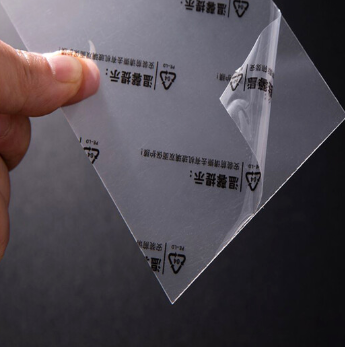
Acrylic surfaces are easily scratched by hard objects and may produce significant scratches during transportation and processing. Foam or protective film shall be used during processing and transportation to reduce friction. When the board has static electricity, it is easy to attach dust. Before screen printing or painting, it should be wiped clean with suede or a soft cloth dipped in 1% soapy water.
There are various processing methods for acrylic sheets, and different methods are suitable for different scenarios and products:
Typical product scenarios applicable to processing methods
Laser cutting of fine shapes, complex graphics, thin plate cutting of advertising letters, signs, lightbox panels, handicrafts
CNC engraving three-dimensional patterns, three-dimensional modeling, thick plate processing fine patterns, complex modeling, deep carving products
Hot bending curved surface, angle bending display stand support, logo structure, lightbox edge strip
Vacuum formed large three-dimensional shapes, curved vacuum formed characters, bathtubs, car lamp covers, advertising light box panels
UV printed color patterns, personalized high-definition photos, gradient patterns, complex illustrations
Screen printed solid color patterns, large quantities of signage, simple patterns
Adhesive assembly of multi-component combination display boxes, aquariums, and display racks
Polishing edge beautification, transparency restoration display products, optical components
The combination of laser cutting and CNC engraving is preferred for small batch complex parts; Thick plate curved surface modeling is suitable for hot bending and vacuum forming.
Scenario 1: Bubbles
Appearance of bubbles: White or transparent circular voids appear inside or on the surface of acrylic products, affecting transparency and appearance.
The cause of bubbles:
Vacuum bubbles caused by uneven wall thickness: When the wall thickness of the product is large, the cooling rate of the outer surface is faster than that of the central part, and the resin in the central part shrinks while expanding towards the surface, resulting in insufficient filling in the central part. This situation is called a vacuum bubble.
Bubbles caused by moisture or volatile gases: Water in the raw material evaporates during processing to form bubbles. Trace amounts of moisture can vaporize during processing, leading to the formation of bubbles in the product.
Bubbles caused by improper bonding operation: Oil, dust, or bubble holes hinder the uniform application of adhesive and leave bubbles. Directly blowing air during bonding will cause the adhesive to evaporate quickly, resulting in whitening and bubbles.
Solution for bubbles:
Fully pre dry and reduce resin temperature
Optimize melting temperature and injection molding speed
Determine reasonable gate size based on wall thickness
Reduce injection speed and increase injection pressure
Thoroughly clean the bonding surface before bonding
Reduce heating temperature and control heating time during hot bending
Scenario 2: Stress whitening
The manifestation of stress whitening: Acrylic sheets show white misty marks in the stressed area, with decreased transparency, and in severe cases, whitening occurs around the push rod.
Causes of stress whitening:
Demoulding stress: During demoulding and ejection, due to the small demoulding slope, rough mold cavity and convex mold, the ejection force is too large, resulting in stress and whitening around the ejection rod.
Hot bending stress: The cooling rate after hot bending is too fast, and the shrinkage rate of the inner and outer layers is inconsistent, resulting in stress concentration.
Adhesive stress: The rapid evaporation of adhesive can cause whitening phenomenon. The temperature and humidity of the bonding environment can also directly affect the bonding effect, and the stress on the board and the surface stress caused by cutting tools can affect the bonding effect.
Solution to stress whitening:
By reducing injection pressure, increasing mold temperature and maintaining uniformity, and using annealing method to eliminate stress
Preheat the material to 30-40 ℃ before bonding, and cure it in a 60 ℃ constant temperature box for 2 hours after bonding to eliminate internal stress
After hot bending, a step cooling process is used. First, it is placed in a 60 ℃ environment for 1 hour, then lowered to 40 ℃, and finally to room temperature to gradually release the stress
When polishing, the sandpaper should move in a circular motion, gradually increasing its fineness to over 600 mesh
Condition 3: Silver wire crack
The manifestation of silver wire cracks: Fine silver wire like cracks appear on the surface of acrylic or carved paint areas, spreading like spider webs.
The cause of silver wire cracks:
Recycled materials are more prone to silver wire cracks: Recycled materials are more soluble in organic solvents than new materials, which often leads to silver wire cracks when filling paint after carving. Acrylic sheets with retail prices below 17 yuan/kg are all cast from recycled materials, and their performance cannot meet national standards.
Solvent erosion: Organic solvents in pigments or paints used after carving can corrode the surface of recycled boards, causing cracks.
Stress cracking: Residual stress, external stress, and stress deformation caused by external environment can all lead to cracking. When embedding metal parts during injection molding, stress is most likely to occur, and cracking is likely to occur after a period of time.
Solution to Silver Wire Cracks:
Choose acrylic pigments (resin based) instead of solvent based pigments that are prone to cracking
Choose amino paint
Polish after painting
Before screen printing or painting, wipe the surface of the board clean with suede or a soft cloth dipped in 1% soapy water
Fundamental solution: Use new materials to produce cast acrylic sheets, eliminating the risk of silver wire cracking caused by recycled materials from the source
Q1: What is the most likely reason for bubbles appearing during the processing of acrylic sheets?
The most common reason is that the moisture in the raw materials evaporates during the processing. Secondly, vacuum bubbles are caused by the cooling shrinkage of the central part when the wall thickness is large. It is recommended to dry the material thoroughly (80-90 ℃, 3-4 hours) before processing, and optimize the injection molding speed and temperature parameters.
Q2: What causes the surface of acrylic board to turn white? How to handle it?
Surface whitening is usually caused by stress - excessive pushing force during demolding, rapid cooling after hot bending, and rapid evaporation of adhesive can all lead to it. Solution: For slight whitening, use a soft cloth dipped in neutral detergent to gently wipe it off; Severe whitening requires annealing treatment to eliminate internal stress; Adhesive whitening can be cured for 2 hours in a constant temperature box at 60 ℃.
Q3: What should I do if there are silver wire cracks when filling paint after carving?
The most common reason for silver wire cracks is the use of recycled materials, which are more soluble in organic solvents than new materials. Solution: ① Choose acrylic pigments (resin based); ② Choose amino paint; ③ Paint and then polish. The fundamental solution is to use brand new materials to cast the board from the source.
Q4: How to solve the problem of bubbles or deformation in acrylic sheets during hot bending?
Hot bending bubbles are usually caused by excessive temperature or moisture in the board. Solution: ① Reduce the heating temperature and control the heating time; ② Dry the board at 80 ℃ -90 ℃ (3mm board requires at least 12 hours); ③ After hot bending, a step cooling method is used. First, let it sit at 60 ℃ for 1 hour, then lower it to 40 ℃, and finally reach room temperature.
Q5: Why are some sheets prone to cracking during processing, while others do not?
The core differences lie in the grade of raw materials and production processes. The new material casting board has high molecular weight, dense structure, low internal stress, and good processing stability; The molecular chain of the recycled sheet has partially broken, with many impurities and high internal stress, making it more prone to cracking during cutting, carving, and hot bending. In addition, improper temperature control, tool passivation, and rapid cooling during processing can also cause cracking.
| product type | pet、ps、acrylic、acrylic mirror、pvc sheet,acrylic sheet |
| thickness | 0.35-300mm |
| Styles | 1220*2440,1220*1830,500*900,50*60,960*1950,700*900/Customization of various specifications and sizes |
| delivery time | 5-8day |
| manufacture | Yifang |
related products