What are the uses of acrylic sheet processing technology Easy to understand
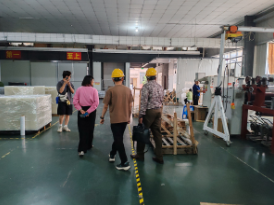
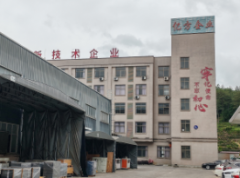
$1.15 available: In StockQuick Overview: Zhejiang Yifang New Materials, with 20 years of production and processing, international standards, and a daily output of 70 tons.
What are the uses of acrylic sheet processing technology? Easy to understand
The reason why acrylic sheet can become a popular material in advertising decoration, home soft decoration, industrial accessories, art customization and other fields is that it can be "cut, carved, bent, printed, and glued" - the combination of multiple processing techniques allows a flat sheet to be turned into various finished products such as lamp boxes, display racks, handicrafts, aquariums, etc.
Different processing techniques correspond to different purposes: laser cutting for fine modeling, CNC engraving for three-dimensional patterns, hot bending for curved surfaces, vacuum forming for large three-dimensional modeling, UV printing for color patterns. This article will systematically sort out the application scenarios of acrylic sheet processing technology from four dimensions: the purpose, characteristics, precautions, and common problems of each process.
Acrylic sheets have a wide range of applications and can be mainly divided into the following categories:
Advertising display category: lightboxes, signs, signboards, directional signs, display stands, crystal characters, illuminated characters, platform number plates, etc.
Commercial display category: cosmetics display rack, jewelry display rack, mobile phone display rack, watch display rack, product display rack, brand display cabinet, etc.
Architectural decoration: shop windows, soundproof doors and windows, daylighting covers, wall panels, suspended ceilings, corridor ceilings, etc.
Industrial accessories: machine dust covers, machine control panels, face covers, baffles, indicator signs, etc.
Home furniture category: acrylic edge table, table table, stool, chair, partition board, etc.
Craft gifts: photo frames, photo stands, trophies, medals, nameplates, authorization plates, ornaments, fish tanks, boxes, etc.
Medical category: baby incubators, various surgical medical equipment.
1. Laser cutting - the preferred choice for precision modeling
Laser cutting utilizes high-energy laser beams to instantly vaporize acrylic materials, achieving non-contact precision cutting. Its core features include high precision (up to ± 0.01mm), smooth cutting without the need for secondary processing, and suitability for complex graphics and fine details. The size accuracy of laser cut acrylic can reach within millimeters.
Cast acrylic is the best choice for laser cutting, providing extremely smooth and clear edges. Laser cutting is widely used in advertising text, signage, display stands, lightbox panels, handicrafts and other scenes.
2. CNC engraving - a powerful tool for three-dimensional modeling
CNC engraving uses computer numerical control technology to control cutting tools for fine processing of acrylic. Its core features include: suitable for making complex structures, 3D modeling, and precision panels; It can be mass-produced, but the initial programming cost is relatively high. CNC engraving is commonly used for products with fine patterns, complex shapes, or deep carving.
3. Hot bending forming - creating curved and curved surfaces
Acrylic cannot be cold bent, it can only be bent after heating. Its core features include: local hot bending can be carried out at 70-80 ℃; The overall hot bending needs to be heated to 140-180 ℃; After hot bending and cooling, the shape is stable and does not deform. Hot bending is commonly used for display rack support, logo structure, lightbox edge strips, curved display cabinets, shaped decorative mirrors, etc.
4. Vacuum forming - large three-dimensional modeling
Vacuum forming is the process of heating and softening acrylic sheets (180-220 ℃) and then forming them by vacuum adsorption onto molds. Its core features include: suitable for making large three-dimensional shapes, vacuum formed characters, luminous characters, etc; High temperature control is required, as excessive temperature can cause the sheet to crack.
5. UV Printing - The Ultimate Solution for Color Patterns
UV printing adopts digital inkjet technology, which does not require plate making and can be printed and dried immediately. Its core features include: the ability to output high-definition photos, gradients, complex illustrations, and 3D effects; Delicate colors and rich layers; Strong adhesion and good outdoor durability; Specially suitable for personalized customization, sampling, and small-scale production.
6. Screen printing - an economical and efficient solid color solution
Screen printing involves printing ink onto an acrylic surface by creating a film stencil. Its core features include: suitable for solid color patterns, unable to achieve gradient effects; A color requires a screen; Low cost, suitable for acrylic products with relatively low requirements.
7. Bonding and Polishing - Finished Product Assembly and Beautification
Adhesive bonding is an important step in making display boxes, aquariums, and display stands. Polishing can restore the high transparency of acrylic, and flame polishing and cloth wheel polishing are common processes.
Precautions for laser cutting
Keep the material surface clean before processing
Thick plate cutting requires adjusting the power to avoid yellow edges
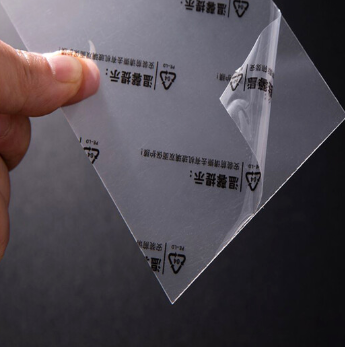
The protective film on the surface of the board should choose a high viscosity film to avoid cutting powder and scratching the board surface
Pay attention to smoke exhaust and ventilation during cutting to prevent steam accumulation
CNC engraving precautions
Excessive tool temperature may cause burns or broken edges, requiring professional machine adjustment experience
When carving acrylic, do not use layered carving and set it to the optimal depth at once
Choose a 3D carving scheme as much as possible for carving, and choose a 90 degree conical knife
Precautions for hot bending forming
Insufficient temperature can easily cause cracks, while excessive temperature can lead to yellowing and deformation of the board
To prevent cracking during hot bending of thick plates, micro grooves need to be opened
The number of hot bending cycles should be controlled within 2-3 times
Precautions for vacuum forming
The heating temperature is appropriate, and when the temperature is high, the acrylic board will crack
The convex mold should have a slope, and the upper and lower stools can detach the membrane
Precautions for UV Printing and Silk Screen Printing
Before UV printing, a coating should be sprayed on the surface to facilitate better adhesion of the pigment
Ink adhesion test is required for hardened boards
After the silk screen printing is completed, wait for the ink to completely dry
Q1: How to choose between laser cutting and CNC engraving?
Laser cutting is suitable for cutting complex shapes, fine details, and thin plates, with high precision and smooth incisions. CNC engraving is suitable for thick plates, 3D modeling, and deep carving, and can be produced in large quantities. Simply put, laser is used for fine flat modeling, and CNC is used for deep three-dimensional carving.
Q2: What is the difference between hot bending and vacuum forming?
Hot bending is the process of heating a part or the whole of a board and bending it into a curved surface or angle, suitable for making curved display stands, lightbox edges, etc. Blister molding is the process of heating and softening a sheet metal and then vacuum adsorbing it onto a mold to form it. It is suitable for producing large three-dimensional shapes, vacuum formed characters, and more. Hot bending is' bending ', while vacuum forming is' suction'.
Q3: Which effect is better between UV printing and screen printing?
The UV printing effect is better. UV printing can output high-definition photos, gradients, complex illustrations, 3D effects, with delicate colors and rich layers. Silk screen printing is only suitable for solid color patterns and cannot achieve gradient effects. But silk screen printing has a lower cost and is suitable for large-scale solid color printing.
Q4: Does acrylic need polishing after processing?
Determine based on demand. If high transparency is required for edges (such as display items, optical components), it is recommended to perform polishing treatment. If it is only for ordinary applications, the edges after laser cutting are already smooth and generally do not require secondary processing.
Q5: Is it easy for acrylic sheet to crack during processing?
If the quality of the board is good and the processing parameters are set correctly, it is not easy to crack. The main reasons for cracking include: using recycled sheet materials (with high impurities and internal stress), insufficient or unannealed hot bending temperature, and excessively high tool temperature during engraving. It is recommended to choose high-quality casting plates and confirm the parameters by cutting with waste materials before processing.
| product type | pet、ps、acrylic、acrylic mirror、pvc sheet,acrylic sheet |
| thickness | 0.35-300mm |
| Styles | 1220*2440,1220*1830,500*900,50*60,960*1950,700*900/Customization of various specifications and sizes |
| delivery time | 5-8day |
| manufacture | Yifang |
related products