What is the difference between organic glass sheet and cast acrylic sheet Source Factory Analysis
$1.15 available: In StockQuick Overview: Zhejiang Yifang New Materials, with 20 years of production and processing, international standards, and a daily output of 70 tons.
What is the difference between organic glass sheet and cast acrylic sheet? Source Factory Analysis
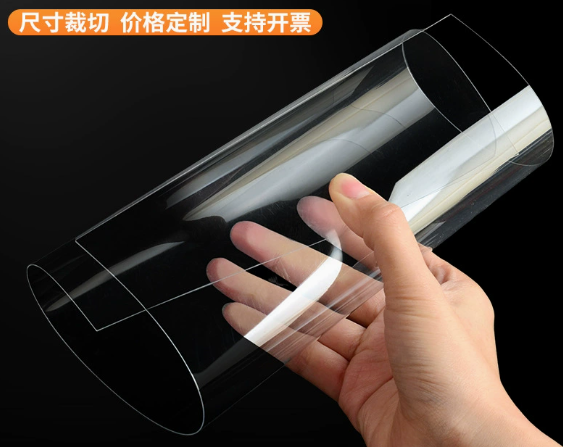
In the procurement of transparent plastic sheets, "organic glass sheet" and "acrylic sheet" are the two most frequently used names, and many people think they are two different materials. In fact, organic glass and acrylic are essentially the same material in chemistry - polymethyl methacrylate (PMMA), but in the professional field, the key to determining quality is whether it is "cast" or "extruded".
Organic glass "is the name of the material," acrylic "is an English transliteration, and" casting "and" extrusion "are the core process indicators that distinguish high and low performance. Cast plates, due to the slow polymerization process of liquid monomers in molds, have higher molecular weight and longer molecular chains, exhibiting superior mechanical properties and weather resistance, making them the preferred material for high-end advertising signs, display props, and industrial accessories. Zhejiang Yifang New Materials, as the source factory, focuses on the production and supply of high-quality cast acrylic sheets. This article will systematically sort out the differences, uses, and procurement points between the two.
Organic glass, also known as acrylic or acrylic, with the chemical name polymethyl methacrylate (PMMA), is a synthetic resin material known for its high transparency, low cost, and ease of processing, with a light transmittance of over 92%. According to the production process, PMMA sheets can be further divided into cast sheets and extruded sheets, and the performance differences between the two are mainly reflected in the following aspects:
Characteristics of casting plate: The casting plate is made of liquid MMA monomer as raw material, which is slowly polymerized and solidified by injection into a glass mold. Due to the thorough polymerization process and long and complete molecular chains, the cast plate has a molecular weight of over 1 million g/mol, exhibiting excellent stiffness, strength, and chemical resistance. In terms of transparency, the transparency of the casting board can reach 92% -98%, with smooth and transparent edges without any blemishes. After polishing, it presents a crystal clear glass texture. In terms of weather resistance, the casting plate added with ultraviolet absorber has excellent yellowing resistance and aging resistance, and its outdoor service life can reach 5 to 10 years. In terms of processing, cast plates are suitable for precision machining such as laser cutting and CNC engraving, with small processing deformation and good dimensional stability. This type of board is particularly suitable for small batch processing, with unparalleled flexibility in color system and surface texture effect, and a complete range of product specifications, suitable for various special purposes.
Characteristics of extruded board: The extruded board is made of PMMA particles as raw material, which are heated and melted before being continuously extruded through a die. It is a highly automated and continuous production method. Compared with cast plates, extruded plates have a lower molecular weight (about 600000 g/mol) and slightly weaker mechanical properties. However, this characteristic is beneficial for bending and thermoforming processing, and is advantageous for rapid vacuum forming when dealing with large-sized plates. Meanwhile, the thickness tolerance of extruded plates is smaller than that of cast plates, making them suitable for large-scale standardized production. However, due to the large-scale automated production of extruded boards, the color and specifications are difficult to adjust, and the diversity of product specifications is limited to a certain extent.
Comparison Table of Casting and Extrusion Performance:
Performance indicators: Cast board, extruded board
Light transmittance 92% -98%, approximately 92%
The edge quality is smooth, transparent, and free of blemishes. There may be blemishes or yellowing
High molecular weight (>1 million g/mol) and low molecular weight (about 600000 g/mol)
High hardness and rigidity, moderate resistance to deformation, more flexible
Weather resistance (UV resistance) excellent (5-10 years) average (UV resistance needs to be added)
Excellent chemical resistance, moderate
Processing adaptability: Laser/CNC/engraving is better, hot bending/vacuum forming is better
Thickness tolerance of approximately ± 0.2mm ± 0.1mm
The color flexibility is extremely high, and any color number is limited, which can only be adjusted in large quantities
Batch features, small batch flexibility, large batch efficiency
Material awareness clarification: In recent years, all sheets made of transparent plastics (such as PS, PC, etc.) have been collectively referred to as organic glass in the market, leading some buyers to mistake ordinary PS organic sheets for PMMA acrylic sheets. Therefore, in professional procurement, emphasizing "cast acrylic" or "PMMA cast board" means a double high standard requirement for raw material purity and production process.
The market prices of organic glass panels and cast acrylic panels are influenced by various factors, and choosing direct supply from the source factory is an effective way to control costs and ensure quality. Zhejiang Yifang New Materials, as the source factory, provides a clear price system:
Transparent organic glass panel price system (1220 × 2440mm):
Thin economy type (0.6mm-1.5mm): 23 yuan to 50 yuan/sheet, suitable for lightweight needs such as lightbox panels, advertising film substrates, and handicraft mounting.
Conventional all-around type (1.7mm-3.0mm): 56 yuan to 96 yuan/sheet, suitable for display racks, signs, furniture partitions, bathroom accessories, etc., with the best cost-effectiveness, combining strength and transparency.
Thickened industrial grade (4.0mm-8.0mm): 126 yuan to 248 yuan/sheet, suitable for equipment protective covers, building partitions, load-bearing structures, etc., with much higher impact resistance than ordinary glass.
The main factors affecting prices are:
Raw material grade: The price difference between new and recycled materials can reach several times. Pure new material with a light transmittance of over 92% and excellent UV resistance; The light transmittance of the return plate is less than 80%, and it will turn yellow significantly after six months.
Production process: Cast plates are priced higher than extruded plates due to their long production cycle and complex procedures.
Thickness: For every 1mm increase in thickness, the price increases by approximately 20% -30%.
Purchase quantity: The larger the batch, the lower the unit price.
Customized processing: Additional processes such as size cutting, irregular processing, and screen printing may incur additional costs.
Zhejiang Yifang, as the source factory, has its own production line and large-scale production, without any intermediary markup. The price of the same quality can be reduced by more than 30%.
In the field of advertising signage and commercial display, acrylic advertising boards have bright colors, strong chemical resistance, excellent mechanical properties and rigidity, and a fashionable appearance that is very suitable for the production and application of various signs, lightboxes, and signage in the advertising industry, giving people a visual impact. The casting board has unparalleled flexibility in color system and surface texture effect, making it particularly suitable for small batch processing. It is also suitable for various customized processing of luminous LOGO light boxes in exhibition design. Specific applications include: high-end luminous characters and crystal characters, brand image walls, product display racks, jewelry and cosmetics display cabinets.
In the field of architectural decoration and home furnishings, building applications such as shop windows, soundproof doors and windows, daylighting covers, telephone booths, etc; Indoor partitions, ceiling decorations, wall panels and other indoor decorations; Bathtubs, shower rooms, kitchen countertops and other sanitary ware; Furniture such as coffee tables, dining tables, cabinet doors, etc.
Industrial supporting and medical device fields: industrial applications such as instrument panels, equipment covers, and industrial protective covers; Medical equipment such as baby incubators and surgical medical devices; Vehicles such as trains and cars have doors and windows in the transportation sector.
Livelihood and lighting fields: handicrafts, cosmetic stands, aquariums and other household items; Lighting products such as fluorescent lamps, pendant lamps, and street lamp covers.
Quality advantage: Cast acrylic sheets form longer molecular chains during slow polymerization, giving the sheet higher mechanical strength, better chemical corrosion resistance, and more stable dimensional accuracy. In long-term outdoor use, cast boards exhibit less yellowing and brittleness compared to extruded boards, which is why cast boards are preferred in high-end advertising and engineering applications.
Economic advantage: Choosing direct supply from the source factory eliminates the cost markup of intermediate circulation links. Zhejiang Yifang's full process self-control production chain continuously reduces raw material and production costs through large-scale procurement and efficient scheduling, ultimately benefiting customers.
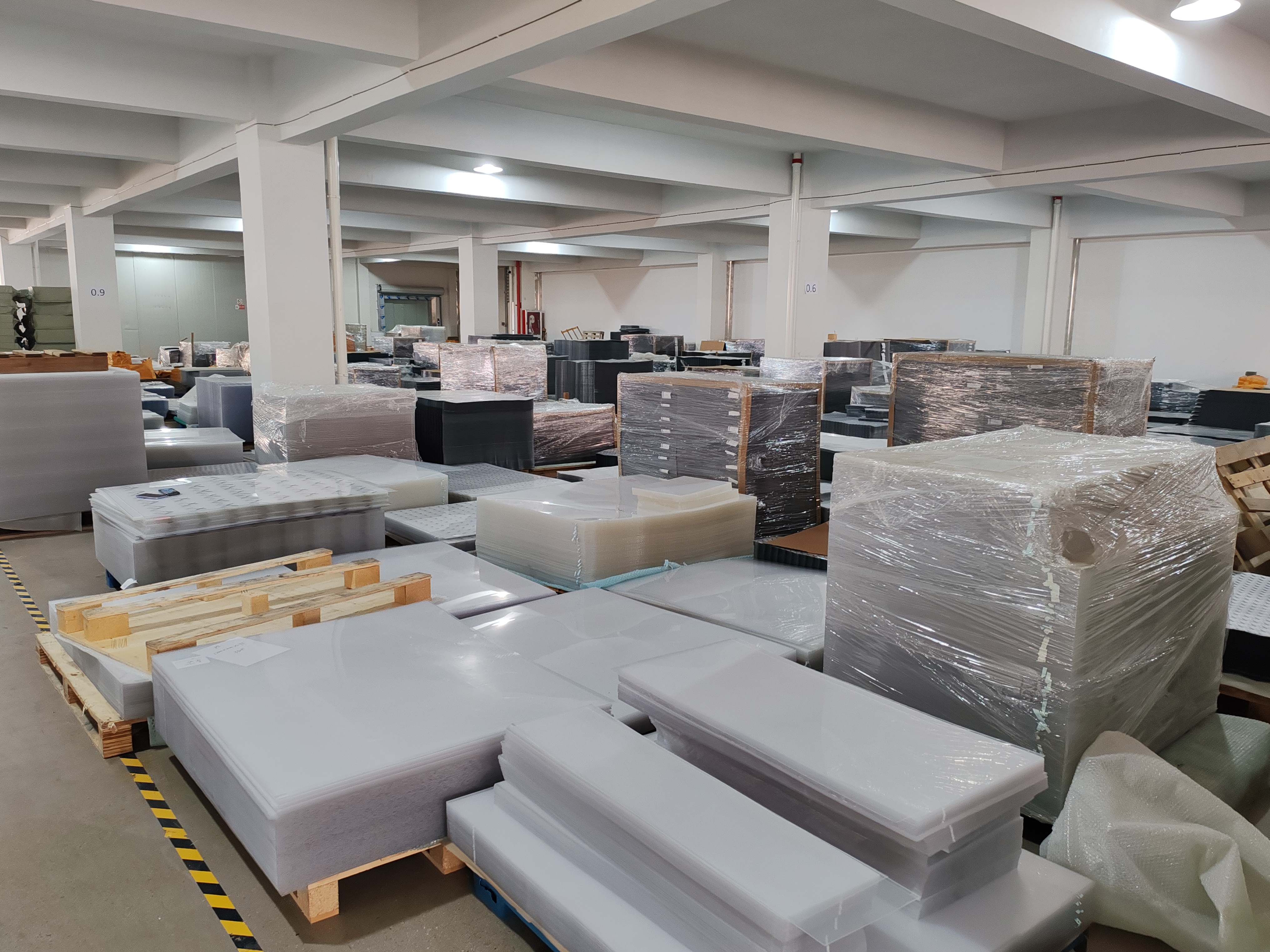
Supply advantage: Zhejiang Yifang, as the source factory, has the scale advantage of an annual output of 22500 tons and a daily production capacity of 70000 KG, and can respond to customers' large-scale and emergency procurement needs at any time. Support small batch trial orders and large batch customization, with fast delivery within 48 hours and a professional technical team to provide full support throughout the process.
Service advantage: The company has obtained ISO9001 quality management system certification and ISO14001 environmental management system certification, and its products comply with export environmental standards. We provide free technical consultation, sample shipping services, unconditional returns and exchanges for quality issues, and offer customers a full process service from selection advice to after-sales support.
Q1: What is the difference between organic glass sheet and cast acrylic sheet?
In terms of material essence, the two are the same material - PMMA polymethyl methacrylate. The difference is that in professional procurement, "cast acrylic" emphasizes high-quality production processes and superior performance. The key to truly determining quality is "casting" or "extrusion" - casting plates are slowly polymerized from liquid raw materials in molds, with high molecular weight, good rigidity, and strong weather resistance; Extrusion board is made by high-temperature melting and extrusion of granular raw materials, with low cost and high production efficiency. When making a purchase, the differences between these two processes should be balanced based on the specific application scenario.
Q2: How long is the outdoor service life of cast acrylic board?
Cast acrylic sheets made with new materials and added with UV absorbers have an outdoor lifespan of up to 5 to 10 years. After adding ultraviolet absorbers, the pure new acrylic board has a service life of up to 5 to 8 years and will not fade outdoors for 8 to 10 years. Acrylic sheets containing recycled materials have extremely poor UV resistance and will turn yellow and fade within six months at most. Outdoor use is not recommended.
Q3: How can export product certification be guaranteed?
Zhejiang Yifang New Materials has passed ISO9001 quality management system certification and ISO14001 environmental management system certification. The products have passed SGS testing and comply with international environmental regulations such as ROHS and REACH. Customers with export needs can choose with confidence.
Q4: What is the difference between source factory procurement and traditional distributor procurement?
The biggest advantage of source factory procurement is transparent pricing, controllable quality, and guaranteed delivery time. Traditional dealer procurement carries risks such as layer by layer markup and untraceable source of goods. Zhejiang Yifang, as the source factory, has independent and controllable control over the entire chain from raw material procurement to finished product delivery, without any middleman markup. The price of the same quality can be reduced by more than 30%. Buyers can directly obtain first-hand prices, with highly consistent batch quality and shortened delivery times to 7-15 days for bulk orders, resulting in better overall costs.
Q5: How to ensure that the purchased material is 100% brand new cast acrylic sheet?
It can be verified through the following points: firstly, requiring suppliers to provide proof of raw material procurement or third-party testing reports; Secondly, it can be distinguished by appearance - the cross-section of the new material casting plate is transparent and colorless, while the return plate is clearly yellowed; The third is to judge by cutting odor - new material cutting has no irritating odor, while returning material cutting has a pungent odor and a lot of smoke; The fourth is to choose source factories such as Zhejiang Yifang that have passed ISO certification and have brand reputation. Conditional buyers can also request samples for actual outdoor exposure testing to compare the yellowing rate and surface aging degree of different suppliers' boards, in order to verify the true weather resistance of the products.
Q6: What plastic sheet products does Zhejiang Yifang produce?
Zhejiang Yifang is a source manufacturer that integrates research and development, production, and sales. Its main products include acrylic sheets, PS organic sheets, PET sheets, mirror panels, OPP sheets, etc. The products are widely used in food packaging, advertising materials, decoration, photo frames, medicinal packaging, electronic components, and other fields. The service model of the company's "one-stop commercial plastic procurement center" allows customers to avoid having to search for suppliers for different types of boards separately, greatly reducing procurement management costs.
| product type | pet、ps、acrylic、acrylic mirror、pvc sheet,acrylic sheet |
| thickness | 0.35-300mm |
| Styles | 1220*2440,1220*1830,500*900,50*60,960*1950,700*900/Customization of various specifications and sizes |
| delivery time | 5-8day |
| manufacture | Yifang |
related products