What tools are used for repairing scratches on the surface of acrylic sheets Complete tool list and operation guide
$1.15 available: In StockQuick Overview: Zhejiang Yifang New Materials, with 20 years of production and processing, international standards, and a daily output of 70 tons.
What tools are used for repairing scratches on the surface of acrylic sheets? - Complete tool list and operation guide
When faced with scratches on acrylic sheets, many people's first reaction is to "wipe them with toothpaste". Toothpaste can indeed handle minor scratches, but for moderate or deep scratches, toothpaste alone is far from enough. The correct repair requires a complete set of tools - from different grit sandpapers to professional polishing agents, from soft wiping cloths to polishing aids, each step has corresponding tool requirements.
Sharp tools make good work. This article has compiled a complete list of tools for repairing scratches on the surface of acrylic sheets, and provides tool matching schemes and detailed operation guidelines for different scenarios based on the severity of the scratches.
Before starting the repair, it is necessary to accurately assess the severity of the scratches, which determines which tools need to be prepared:
Scratch level feature recommendation tool
Slight scratches, fine lines on the surface, no concave sensation when touched. Toothpaste/acrylic polishing agent+soft cloth
Moderate scratches with visible dents, with grooves on touch. 800 mesh+1500 mesh sandpaper+toothpaste/polishing agent
Deep scratches with obvious damage may affect the strength of 400 mesh → 2000 mesh multi-stage sandpaper+polishing agent+polishing tool
Basic tools (essential)
1. Water sandpaper (multi mesh combination)
Water sandpaper is the core tool for repairing scratches. Suggest preparing sandpaper with the following mesh sizes:
Target Usage Applicable Scenarios
Preliminary polishing of 400 grit rough grinding depth scratches
Preliminary treatment of moderate scratches in 600-800 mesh
1200-1500 mesh fine grinding transition polishing, smooth surface
2000 mesh or above precision grinding for final smoothing treatment
Important reminder: Water sandpaper must be used with water, as dry grinding can generate heat and cause local melting of acrylic.
2. Toothpaste
Toothpaste is the easiest abrasive to obtain, containing fine grinding particles. The conventional toothpaste with white paste and opaque gel has better effect.
3. Acrylic special polishing agent
There are specialized acrylic scratch polishing agents on the market, which have a more professional effect than toothpaste. Suggest preparing a combination of coarse and fine polishing paste, with coarse polishing followed by fine polishing for better results.
4. Soft wiping cloth
Recommend using fabrics made of the following materials:
Suede: the most suitable for acrylic polishing
Glasses cloth/microfiber cloth: soft and non damaging to the surface
Pure cotton fabric: can also be used
Avoid using rough tissues, hard fabrics, and sponges containing abrasive particles.
Advanced Tools (Recommended)
5. Electric waxing machine for automobiles
For situations where there are large scratches or unsatisfactory manual polishing results, a car electric waxing machine can be used in conjunction with toothpaste or car polishing wax for polishing. High efficiency and good results, but require certain operational skills.
6. Acrylic repair paste
There are specialized acrylic repair paste products on the market (such as German brands like Polywatch). Usage: First, apply the repair paste evenly to the polishing position, and then repeatedly rub it with a soft cloth. Repair paste has a better effect on single or small scratches.
7. Flame polishing tool (professional level)
Flame polishing utilizes high-temperature instant melting of acrylic surface, suitable for large-area polishing. But it requires professional equipment and operational skills, and it is not recommended for non professionals to try.
Scenario 1: Minor Scratches - Toothpaste+Soft Cloth
Required tools: toothpaste+soft cloth (suede/eyeglass cloth)
Operation steps:
First, clean the scratched area with soapy water
Squeeze a small amount of toothpaste onto a soft cloth
Gently wipe the scratch with circular motion
After wiping repeatedly for a few minutes, rinse thoroughly with clean water
Check the effect, if there are still traces, repeat the operation
Scenario 2: Moderate Scratches - Water Sandpaper+Toothpaste+Soft Cloth
Required tools: 800 grit sandpaper+1500 grit sandpaper+toothpaste+soft cloth
Operation steps:
Dip 800 grit sandpaper into water and gently polish along the direction of the scratch
After polishing until the scratch becomes lighter, replace it with 1500 grit sandpaper and continue polishing
Rinse the polished area clean with water
Polish with a soft cloth dipped in toothpaste
If scratches are still visible, it indicates that the sandpaper is not deep enough and needs to be reworked
Scenario 3: Deep Scratches - Multi level Sandpaper+Polishing Agent+Polishing Tool
Required tools: 400 mesh → 2000 mesh multi-stage water sandpaper+acrylic polishing agent+soft cloth (+optional waxing machine)
Operation steps:
Use 400 grit sandpaper dipped in water to roughly polish the scratched area
Gradually switch to 600 mesh → 800 mesh → 1200 mesh → 1500 mesh → 2000 mesh and polish step by step
Rinse and inspect after sanding with sandpaper at each level
Finally, use acrylic polishing agent for fine polishing
Wipe with a soft cloth in circular motion until shiny
Scenario 4: Large scale scratches - waxing machine assisted polishing
Required tools: Water sandpaper+toothpaste/polishing wax+car electric waxing machine+soft cloth
Operation steps:
Polish the scratched area with sandpaper using the above method
Dip toothpaste or car polishing wax onto the polishing head of the waxing machine
Uniformly polish the scratched area at low speed
Finally, wipe clean with a soft cloth
1. Protective film is the "first line of defense"
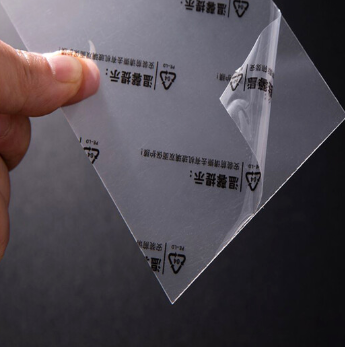
The PE protective film used when acrylic sheets leave the factory is the most effective tool to prevent scratches. During the entire process of processing, transportation, and installation, try to retain the protective film until it is removed before use. If the protective film is damaged, it can be temporarily covered with tape for protection.
2. The "Three Nos Principle" of Cleaning Tools
No need for rough fabrics: use soft materials such as suede, eyeglass cloth, microfiber cloth, etc
No need to grind cleaning agents: avoid cleaning agents containing particles
Do not use organic solvents: avoid alcohol, acetone, banana water, etc
3. Precautions for storage and handling
Small and sharp objects cannot be sandwiched between the boards
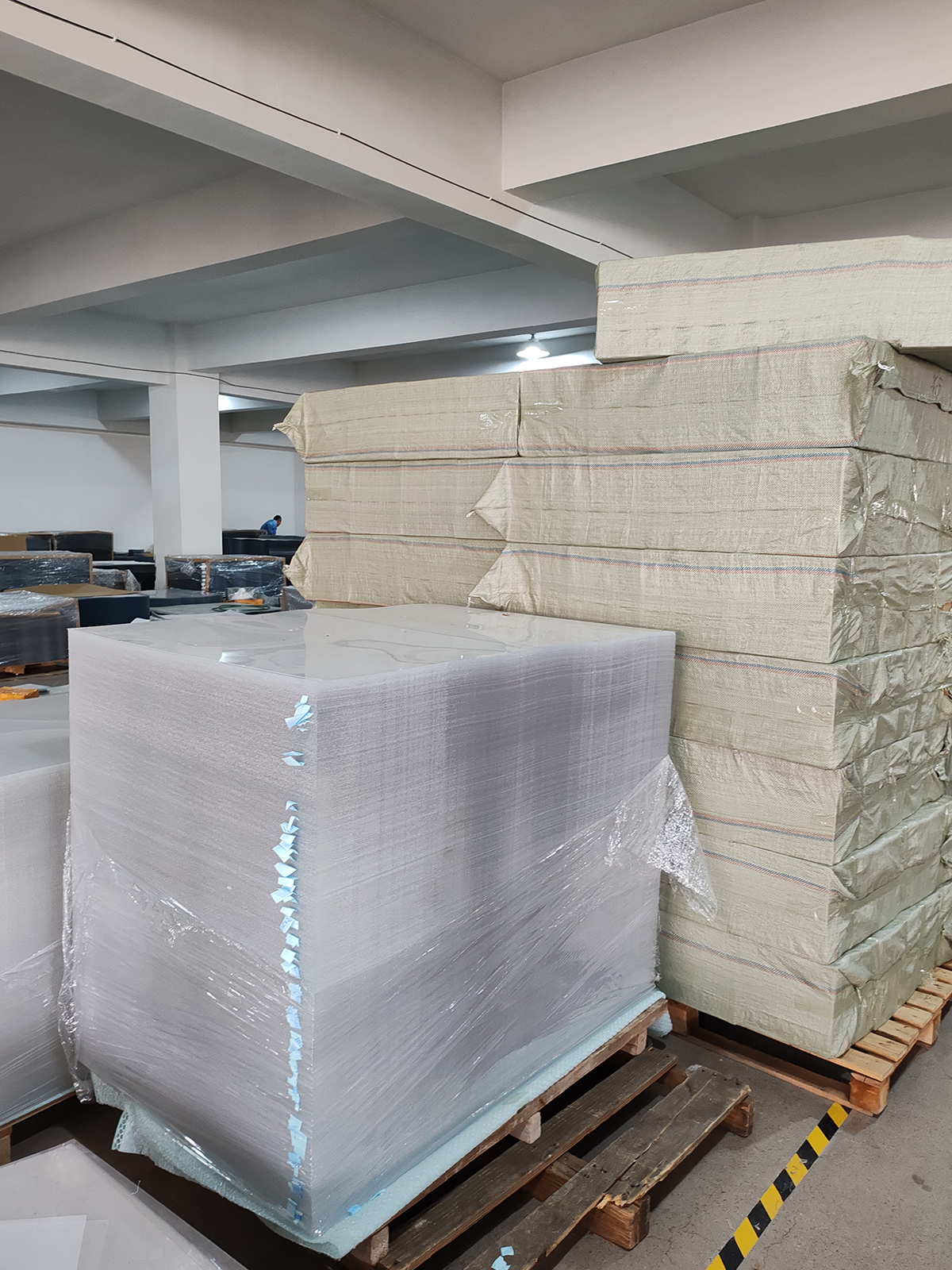
Use foam or protective film to reduce friction when packaging
Handle with care during transportation to avoid collision with hard objects
4. Hardening treatment - enhancing scratch resistance from the source
The surface hardness of ordinary acrylic is about 2-3H, while the surface hardness of reinforced acrylic board can reach 4-5H, greatly improving its scratch resistance. For high demand scenarios, it is recommended to choose reinforced acrylic sheets.
5. Correct daily cleaning methods
Using 1% soapy water and a soft cloth for wiping not only effectively cleans, but also reduces the risk of dust and leaves no hand marks. Regular maintenance with liquid polishing wax can keep the surface shiny and bright.
| product type | pet、ps、acrylic、acrylic mirror、pvc sheet,acrylic sheet |
| thickness | 0.35-300mm |
| Styles | 1220*2440,1220*1830,500*900,50*60,960*1950,700*900/Customization of various specifications and sizes |
| delivery time | 5-8day |
| manufacture | Yifang |
related products