Why is the production cycle of cast acrylic board long
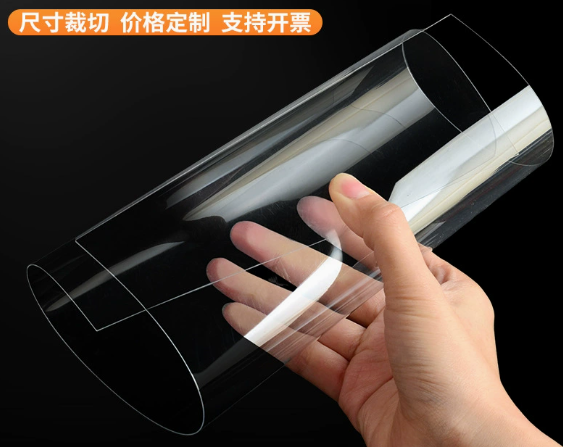
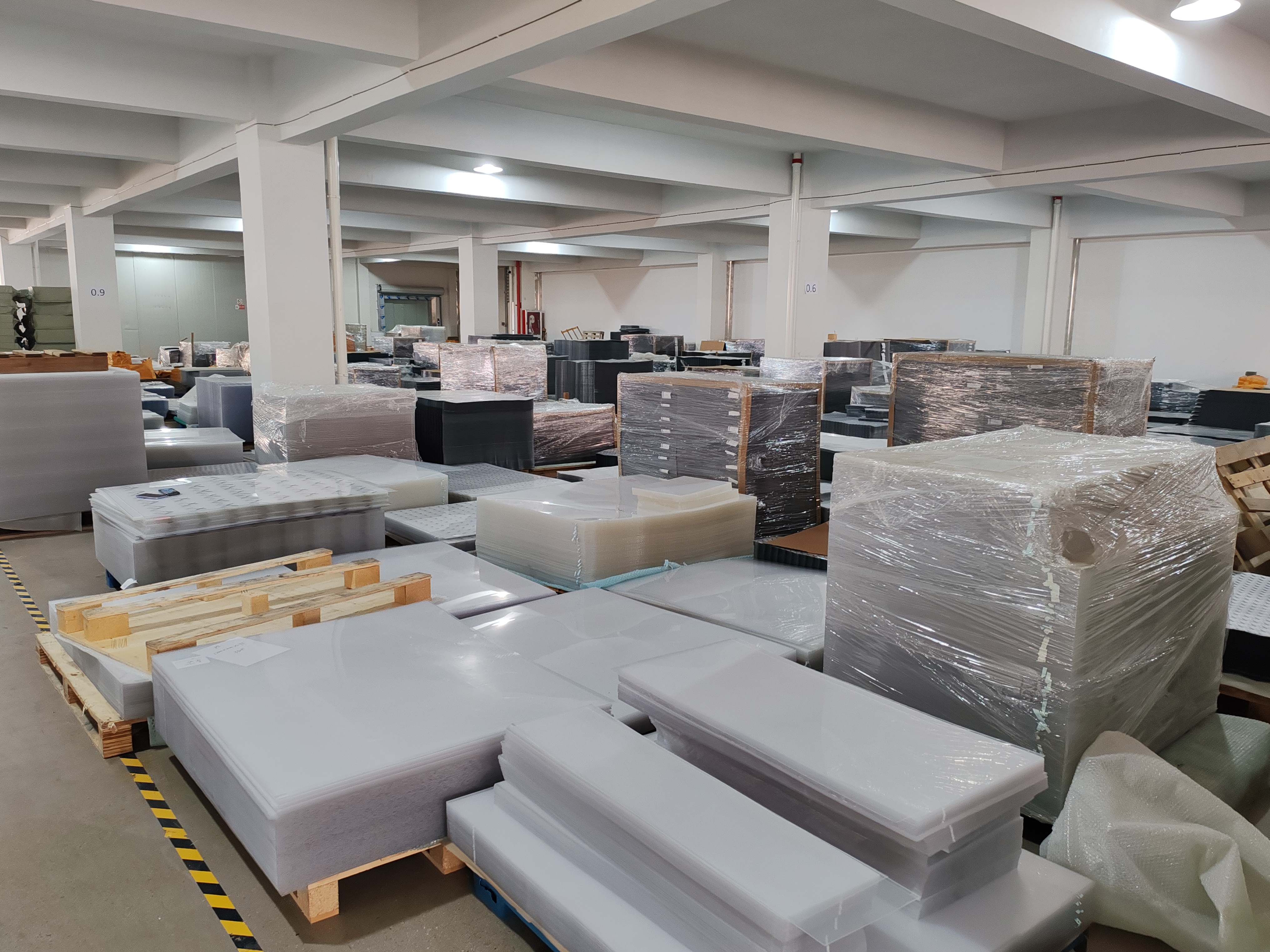
$1.15 available: In StockQuick Overview: Zhejiang Yifang New Materials, with 20 years of production and processing, international standards, and a daily output of 70 tons.
Why is the production cycle of cast acrylic board long
Why are some manufacturers able to ship the same acrylic sheet on the same day, while others have to wait for ten and a half days to deliver? "This is a question that many buyers have when inquiring about prices.
In fact, the production process of acrylic sheets is mainly divided into two types: casting molding and extrusion molding. The production cycle of casting process is much longer than that of extrusion process - extrusion plate only takes a few minutes to tens of minutes from granular raw materials to finished products, while casting plate often requires a continuous reaction process of several hours or even days from liquid monomers to complete polymerization. This explains why the production of cast plates takes longer and directly leads to their market price being much higher than that of extruded plates. This article will systematically analyze the fundamental reasons for the "slow work, fine work" of casting acrylic sheets from the dimensions of production principles, process flow, time cost, etc.
The chemical name for cast acrylic is polymethyl methacrylate (PMMA), and its scientific principle is based on free radical polymerization reaction. Under the action of the initiator, the double bonds in methyl methacrylate (MMA) monomer are opened and interconnected, forming long-chain polymers. The excellent properties of this polymer material are obtained through slow and thorough polymerization reactions.
The core of the casting method is to inject MMA monomer liquid into a glass mold and naturally polymerize and solidify under constant temperature conditions. Specifically, the casting process is divided into the following stages:
Monomer preparation: Purify MMA monomers, remove impurities, and mix them with additives such as initiators, plasticizers, colorants, and anti UV agents in precise proportions.
Casting into mold: Inject the mixed liquid MMA into a flat mold made of two pieces of inorganic glass, and keep the distance between them with washers. The whole process is like "making tofu" - pouring the slurry into a mold and pressing it down, slowly solidifying into shape.
Aggregation reaction: After injection molding, the monomer needs to undergo thermal polymerization under the action of an initiator. When the conversion rate reaches about 10%, it is cooled to room temperature, degassed, and then heated in a water bath and drying room to promote full polymerization of the material. The polymerization process is usually divided into two stages: first, heat it in a water bath to 45 to 60 ℃ to initiate slow polymerization (which takes several hours to several days); Heat up to 90 to 100 ℃ to complete the curing process.
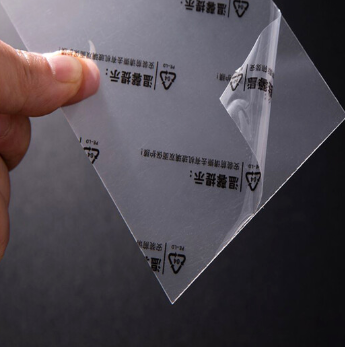
Demoulding and post-processing: After the board is fully polymerized, release it, cut the burrs as needed, apply film protection, and finally package it.
In sharp contrast to the extrusion process, which has a fast production speed and can be molded in a few minutes, the production of cast plates is a typical "slow work, fine work".
Batch production mode: The casting method requires liquid monomers to be loaded into a mold and then left in an oven or water bath for a sufficient amount of time, waiting for the polymerization reaction to gradually complete. The residence time of the monomer in the mold depends on the thickness of the casting plate - the thicker the plate, the longer the polymerization time required. This determines that cast plates cannot achieve continuous and uninterrupted production like extruded plates, and can only adopt batch and intermittent production methods.
Cycle comparison: It is precisely because of the above process characteristics that the casting production molding time is longer, while the extrusion method has a high degree of automation and can produce in large quantities continuously. Compared with extrusion technology, time cost accounts for a considerable proportion of the production cost of casting technology. It is precisely because manufacturers spend more time producing products than selling them that they must ensure sufficient revenue to cover costs with higher pricing.
Differences in economies of scale: From an economic perspective, casting processes are more suitable for small batches and high customization needs, with unparalleled flexibility in color systems and surface texture effects; The extrusion process is suitable for large-scale, standardized production, and the color and specifications are difficult to adjust arbitrarily. In actual procurement, if batch customization of non-standard color palettes is required, it usually requires a production cycle of 10 to 15 days.
The reason why acrylic sheets produced by casting method are "time-consuming" is reflected in the superior physical and optical properties of the finished product
Ultra high transparency: The transparency of the cast board can reach 92%, and some high-end products can reach 94%, far exceeding the common glass on the market (about 85-89%). There are no pockmarks on its edges, it is very transparent, and the overall appearance is crystal clear.
Excellent impact resistance: The impact resistance of cast acrylic can reach dozens of times that of ordinary glass, with a density only half of glass, but its strength far exceeds that of glass. When used outdoors or in densely populated areas, this feature provides unparalleled safety assurance.
Excellent weather resistance: The cast board performs well in accelerated aging tests, with a weather resistance of over 10 years, and its outdoor service life far exceeds that of general plastic materials. After adding ultraviolet absorbers, it can be used in outdoor environments with direct sunlight for a long time without easily yellowing.
Good heat and chemical resistance: The cast plate can continuously withstand temperatures up to 80 ℃, with a softening point of around 110 ℃. It has good corrosion resistance to various chemical reagents and can meet the demanding requirements of high-end application scenarios such as laboratories and medical devices.
Excellent processing performance: Cast plates are easy to cut, drill, carve, bend, thermoform, polish, and bond, with a wide range of processing adaptability. During laser cutting, the cut of the casting plate is smooth and presents a polished edge effect.
High and stable molecular weight: The molecular weight of cast plates is usually above 1 million g/mol, much higher than that of extruded plates, which is about 600000 g/mol. The high-density, long-chain molecular structure endows the board with excellent stiffness, strength, and chemical resistance, making it more reliable in complex environments.
In addition to the above characteristics, cast acrylic sheets also have multiple irreplaceable advantages in production and use:
1. Excellent processing capability for thick plates
The casting method is the most effective process for achieving ultra thick plates, with a standard thickness range of 1.8mm to 100mm or more. First tier manufacturers such as Jinbao can provide ultra wide options with thicknesses ranging from 1.5mm to 300mm, while the processing thickness of extrusion method is usually limited to 0.8mm to 12mm. This makes casting boards the top choice in fields such as aquarium viewing windows and large engineering structural components.
2. The color system is exceptionally rich
During the incomplete liquid stage of polymerization, customers can add color paste as needed to change the color of the board. Jinbao can provide 200 colors and tones of pigments for customers to choose from, and any Pantone color number can be accurately matched. The colors are uniform and consistent from the inside out, and even if some colors are exposed after carving, they will not be distorted.
3. Small batch customization is flexible and agile
Cast plates are particularly suitable for small batch processing, with unparalleled flexibility in color system and surface texture effects, and a complete range of product specifications suitable for various special purposes. Whether it's personalized brand logos or industrial spare parts with small quantities but high precision requirements, the casting process can flexibly respond.
4. Widely used in architecture and large-scale decoration
In the highly demanding fields of architecture and interior design, cast panels exhibit excellent applicability. For example, the irregular exterior walls of the Graz Art Museum feature 1270 high gloss, 20mm thick PLEXIGLAS cast solid panels. The spherical curvature of each board is unique, and through precise cutting and hot bending, they are installed and fixed one by one, which is enough to prove the top-notch ability of cast boards in weather resistance, high transparency, and complex processing.
5. High end visual and tactile experience
The touch of the casting board is thicker and stronger, especially suitable for making high-end display cabinets, shop windows, ornaments and other customized projects that require high visual and tactile requirements.
| product type | pet、ps、acrylic、acrylic mirror、pvc sheet,acrylic sheet |
| thickness | 0.35-300mm |
| Styles | 1220*2440,1220*1830,500*900,50*60,960*1950,700*900/Customization of various specifications and sizes |
| delivery time | 5-8day |
| manufacture | Yifang |
related products