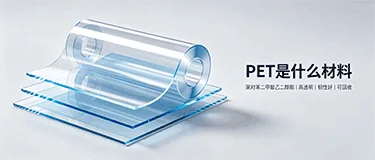

PET is an abbreviation for polyethylene terephthalate, a common thermoplastic polyester plastic with a global annual production of over 80 million tons. It is widely used in beverage bottles, textiles, and food packaging, and has a safety rating of Class 1 (recyclable).
I. Basic Definition of PET Material
PET, short for polyethylene terephthalate, is a polymer compound synthesized from terephthalic acid (TPA) and ethylene glycol (EG) through a polycondensation reaction. Its molecular structure contains an ester group (-COO-), making it an important member of the polyester family.
II. Key Characteristics of PET Materials
| characteristic | Specific parameters |
|---|---|
| density | 1.38-1.41 g/cm³ |
| Melting temperature | 250-260°C |
| Glass transition temperature | 67-81°C |
| Tensile strength | 50-80 MPa |
| Heat resistance | Continuous operating temperature -60~120°C |
-
Excellent mechanical propertiesHigh impact strength, good wear resistance, and excellent dimensional stability.
-
High chemical stabilityResistant to weak acids, weak bases and most organic solvents
-
Good barrier propertiesIt has good barrier properties against oxygen, water vapor and carbon dioxide.
-
High transparencyExcellent optical performance, with a light transmittance of over 90%.
-
Food safetyCompliant with FDA food contact material standards
III. Main Application Areas of PET Materials
-
Packaging industry (accounting for approximately 40%)Beverage bottles (carbonated drinks, mineral water), food trays, cosmetic containers
-
Textile industry (accounting for approximately 35%)Polyester fiber, non-woven fabric, industrial yarn
-
Electronics and ElectricalInsulating films, capacitor dielectrics, magnetic recording materials
-
medical fieldSurgical sutures, artificial blood vessels, and medical device packaging.
IV. Environmental Protection and Recycling of PET Materials
PET is one of the most recyclable plastics, and its recycling symbol is the number "1". Recycling one ton of PET bottles reduces carbon dioxide emissions by approximately 3.2 tons. Recycled PET (rPET) is widely used in the production of new bottles, textile fibers, and automotive interiors.
V. Comparison with common plastics
| Material | Heat resistance | transparency | Barrier | Recycling grade |
|---|---|---|---|---|
| PET | ★★★ | ★★★★★ | ★★★★ | Level 1 |
| ON | ★★ | ★★ | ★★ | Level 2/4 |
| PP | ★★★★ | ★★★ | ★★ | Level 5 |
| PC | ★★★★ | ★★★★ | ★★★ | Level 7 |
Further ReadingModification of PET materials can improve their heat resistance and impact resistance. Common modification methods include glass fiber reinforcement, flame retardant modification, and blending for toughening. These methods are suitable for high-end applications such as automotive parts and engineering structural components.