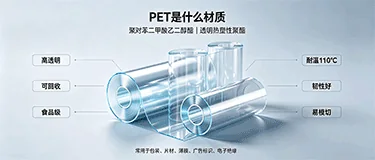

PET stands for polyethylene terephthalate, a thermoplastic polyester plastic with the global designation number 1. It is commonly found in mineral water bottles, food packaging, and textile fibers. It is safe and non-toxic at room temperature, but prolonged use at high temperatures is not recommended.
1. Material definition and basic properties
PET is a saturated polyester polymer material, which is formed by the condensation polymerization of terephthalic acid and ethylene glycol.
-
Appearance:It is transparent or translucent, with a smooth and glossy surface.
-
Physical properties:It has a density of approximately 1.38 g/cm³, is resistant to creep and friction, and has good dimensional stability.
-
Chemical properties:It is resistant to dilute acids, oils and most organic solvents, but not to strong alkalis and hot water (it is easily deformed at ≥70℃).
2. Security Analysis (Answering "Is it safe?")
-
Use at room temperature:It complies with GB 4806.7 and FDA food contact standards, does not release bisphenol A (BPA), and can be used in drinking water, edible oil, and pharmaceutical packaging.
-
High temperature risk:Temperatures exceeding 70°C may release trace amounts of acetaldehyde, affecting the taste; repeated heating or filling with hot water may cause deformation, so it is recommended not to use it in a microwave oven or fill it with boiling water.
-
Recycling level:The number "1" indicates that it is recyclable, but it is easy for bacteria to grow if it is reused more than 10 times or scratched. It is not recommended to use it as a drinking bottle for a long time.
3. Main application areas (answer "What are its uses?")
-
Packaging industry:Beverage bottles, cosmetic containers, and transparent food boxes (accounting for approximately 60% of global PET consumption).
-
Textile industry:Polyester fiber (polyester) is used in clothing, home textiles, and industrial fabrics.
-
Engineering plastics:Reinforced PET (glass fiber reinforced) is used in automotive parts, electronic and electrical housings, and relay frames.
-
other:Film substrates (X-ray film, audio tape), 3D printing filaments, packing straps.
4. Precautions for use and storage
-
Check the triangle mark at the bottom to confirm if it is "1-PET".
-
Avoid storing alcoholic beverages and oils in containers for extended periods (transesterification may accelerate aging).
-
Disposable bottles should be used only and discarded immediately. They are not recommended for long-term water storage, and should especially be kept away from the high temperatures inside a car.
5. Environmental Protection and Recycling
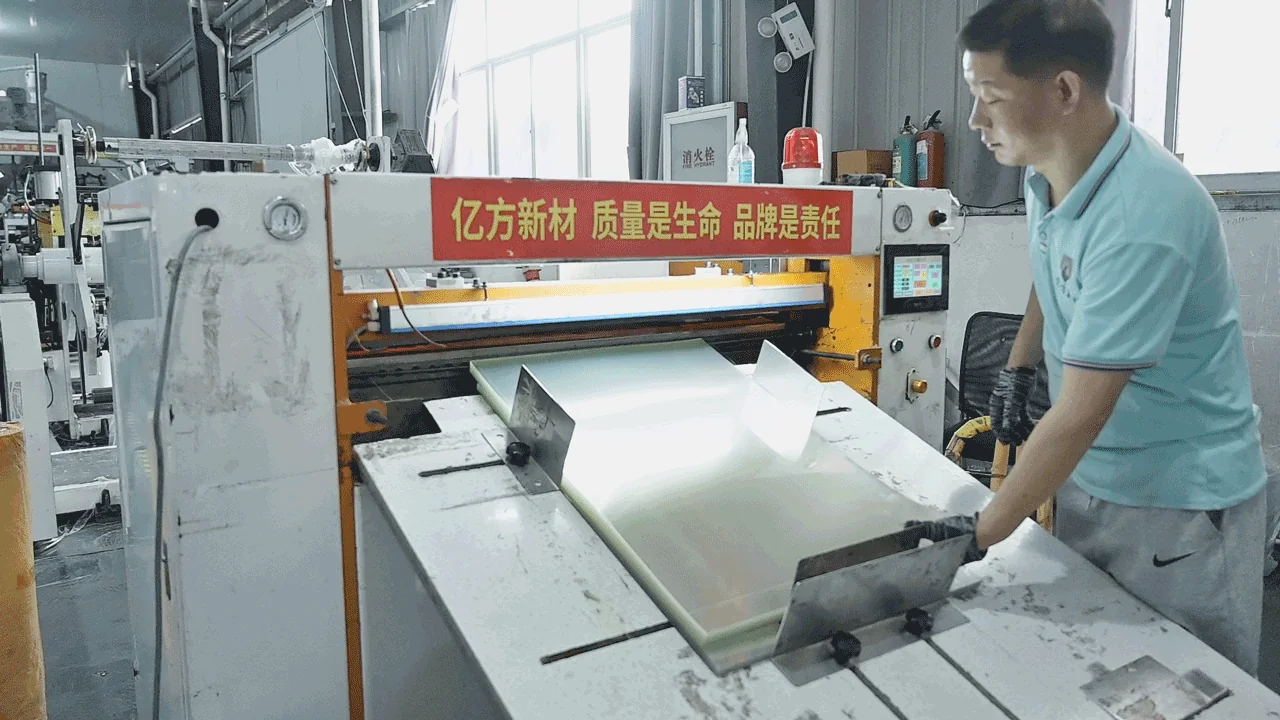
PET is one of the most recyclable plastics. It can be physically recycled into fibers or new bottles, or it can be chemically depolymerized to achieve closed-loop recycling. However, the presence of impurities (such as PVC and labels) will reduce the quality of recycling, so it needs to be disposed of separately.
Summarize:PET is a safe, transparent, and lightweight general-purpose plastic that is harmless to the human body when used correctly (at room temperature, single use). Its core value lies in its high recyclability and wide range of applications, but the limitations on high temperature and repeated use should be noted.